
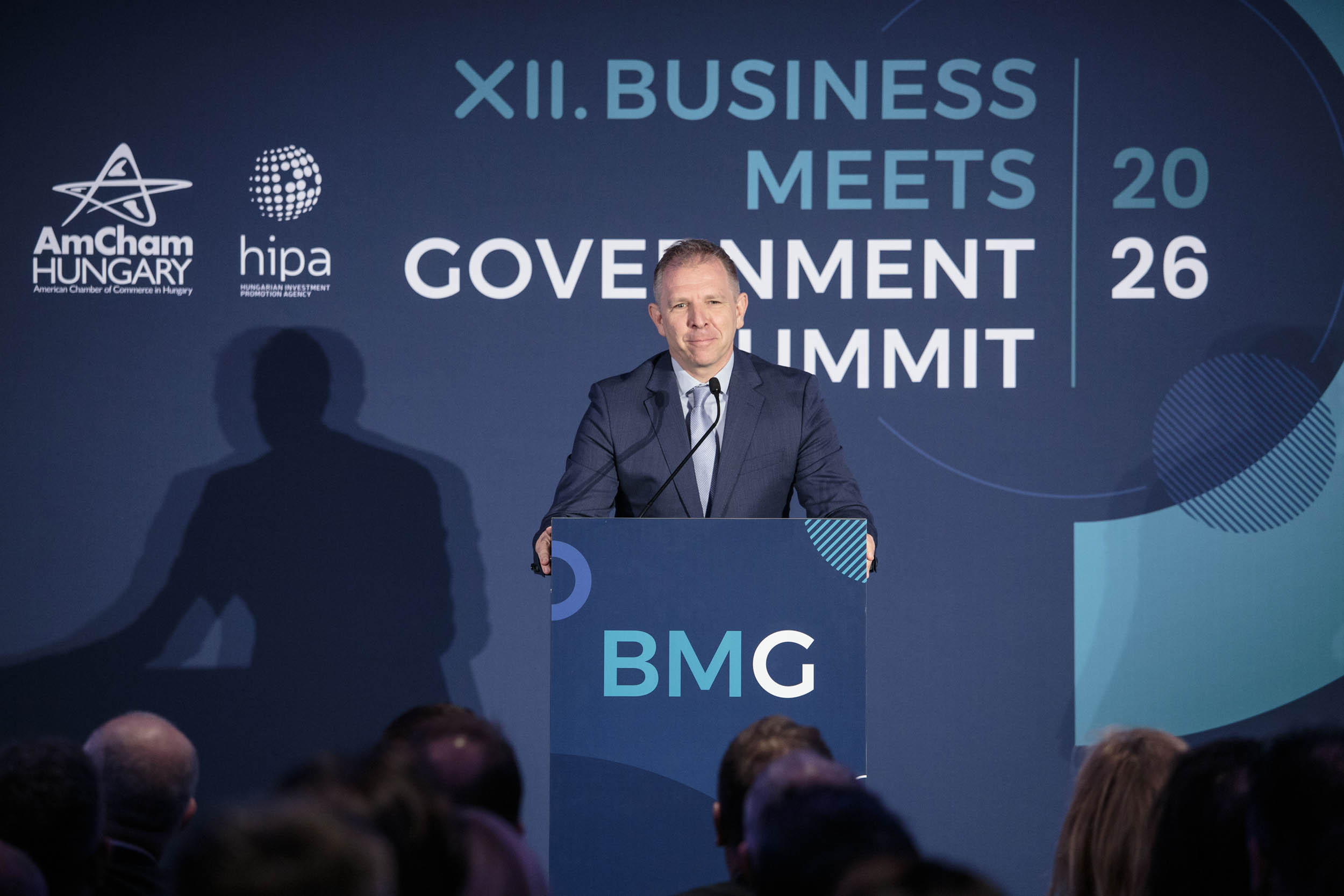
The Business Meets Government Summit, AmCham’s flagship event of the year, was hosted together with the Hungarian Investment Promotion Agency (HIPA) for the 12th time on November 9. It brought together decision-makers and key stakeholders from the government and business community.
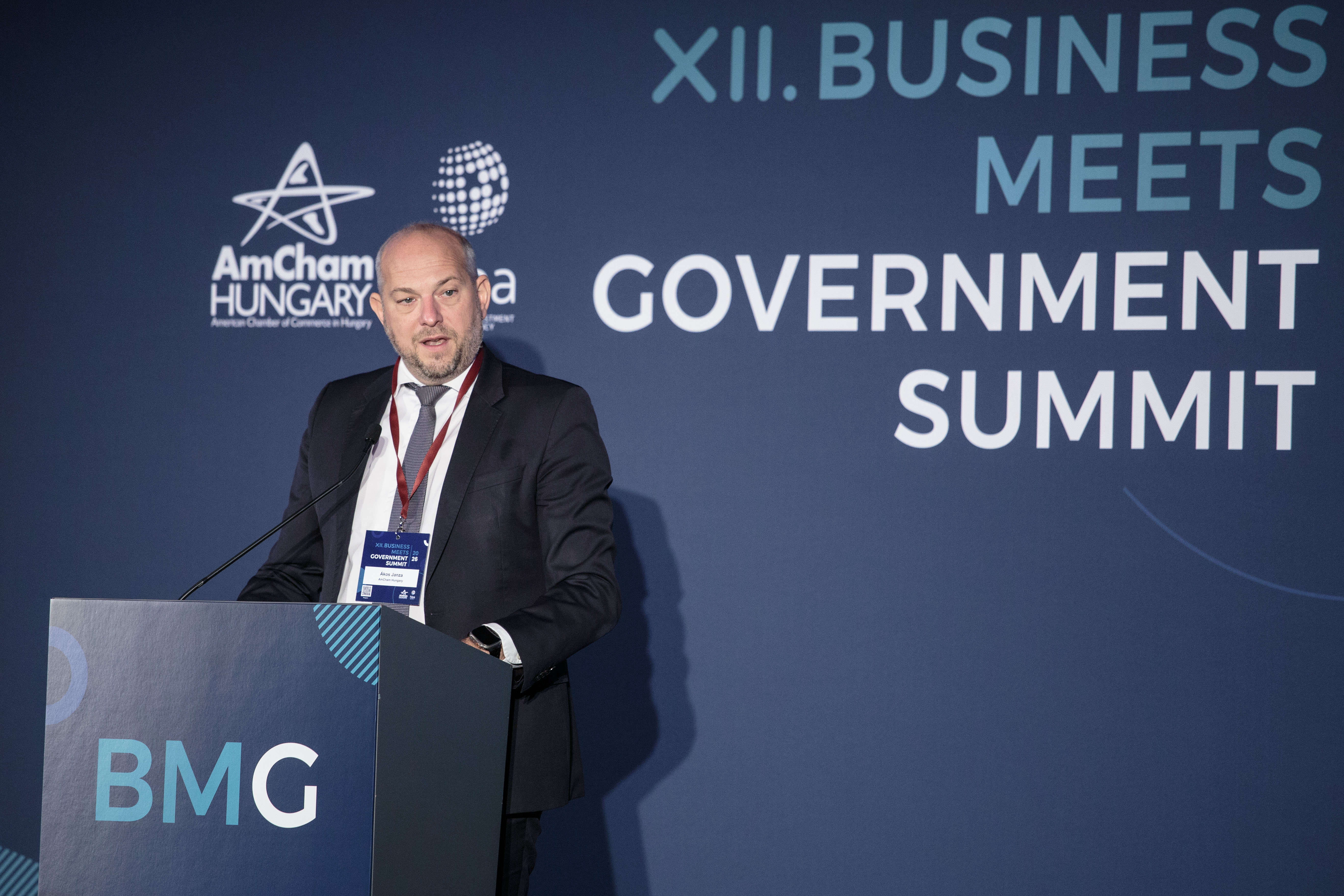
In his opening remarks, AmCham President Ákos Janza, reflecting on Hungary’s economic crossroads, emphasized the importance of regulatory predictability, skilled talent, and innovation in strengthening Hungary’s competitiveness. He reaffirmed AmCham’s commitment to constructive dialogue with policymakers and highlighted the need to retain and expand existing investments alongside attracting new ones.
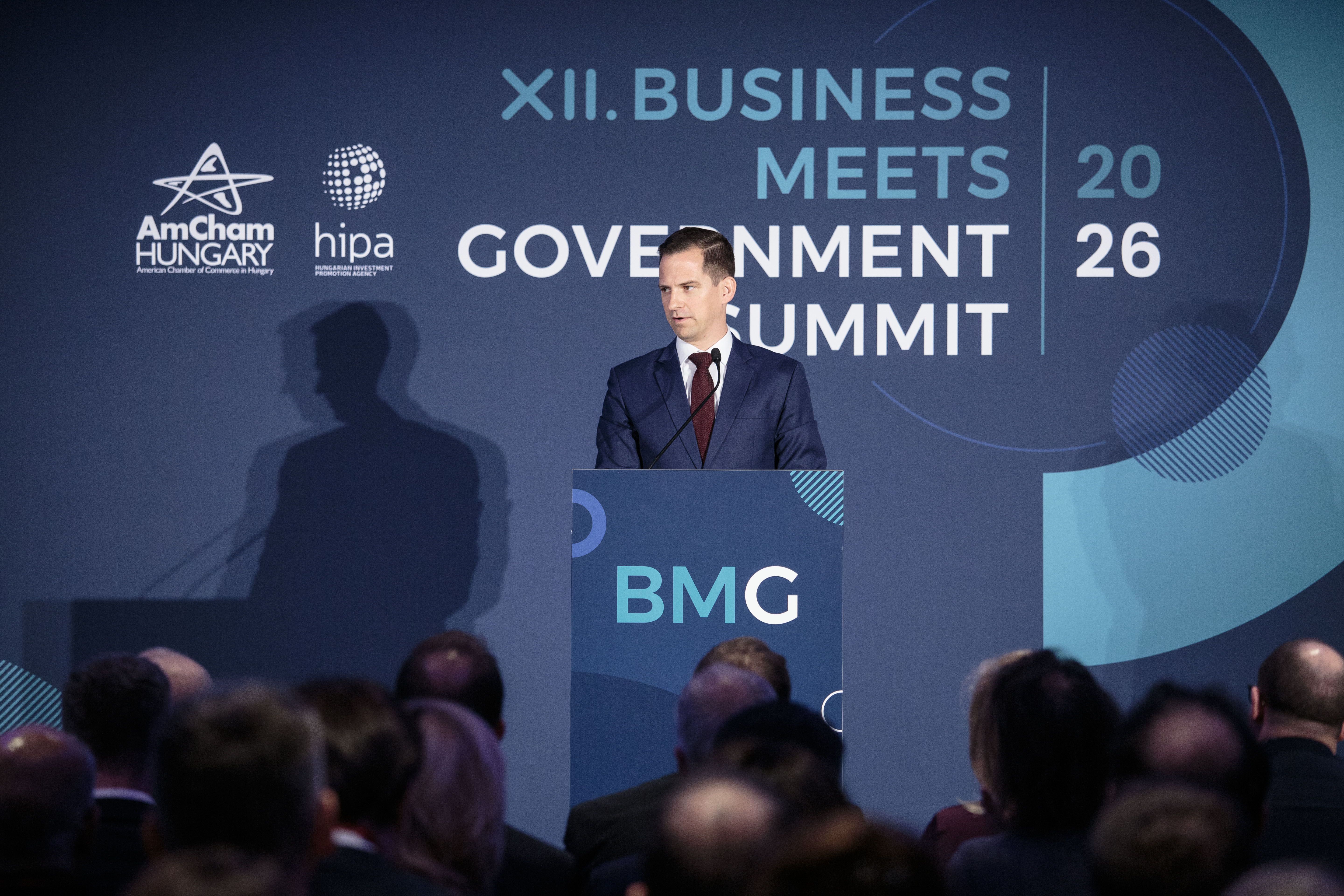
HIPA CEO Bence Buday highlighted Hungary’s strong investment track record and the significant contribution of American companies. Emphasizing continuity and renewal, he outlined HIPA’s focus on attracting higher-value investments, fostering innovation and productivity, and strengthening partnerships between international investors, Hungarian businesses, and Hungary’s leading academic institutions.
In his keynote speech, State Secretary for Tax Policy and Accounting Regulation of the Ministry of Finance Attila Kövesdy outlined Hungary’s current macroeconomic outlook and the government’s economic policy priorities. He also discussed fiscal strategy, budgetary planning, taxation and tax policy, highlighting the government’s approach to supporting future economic growth.
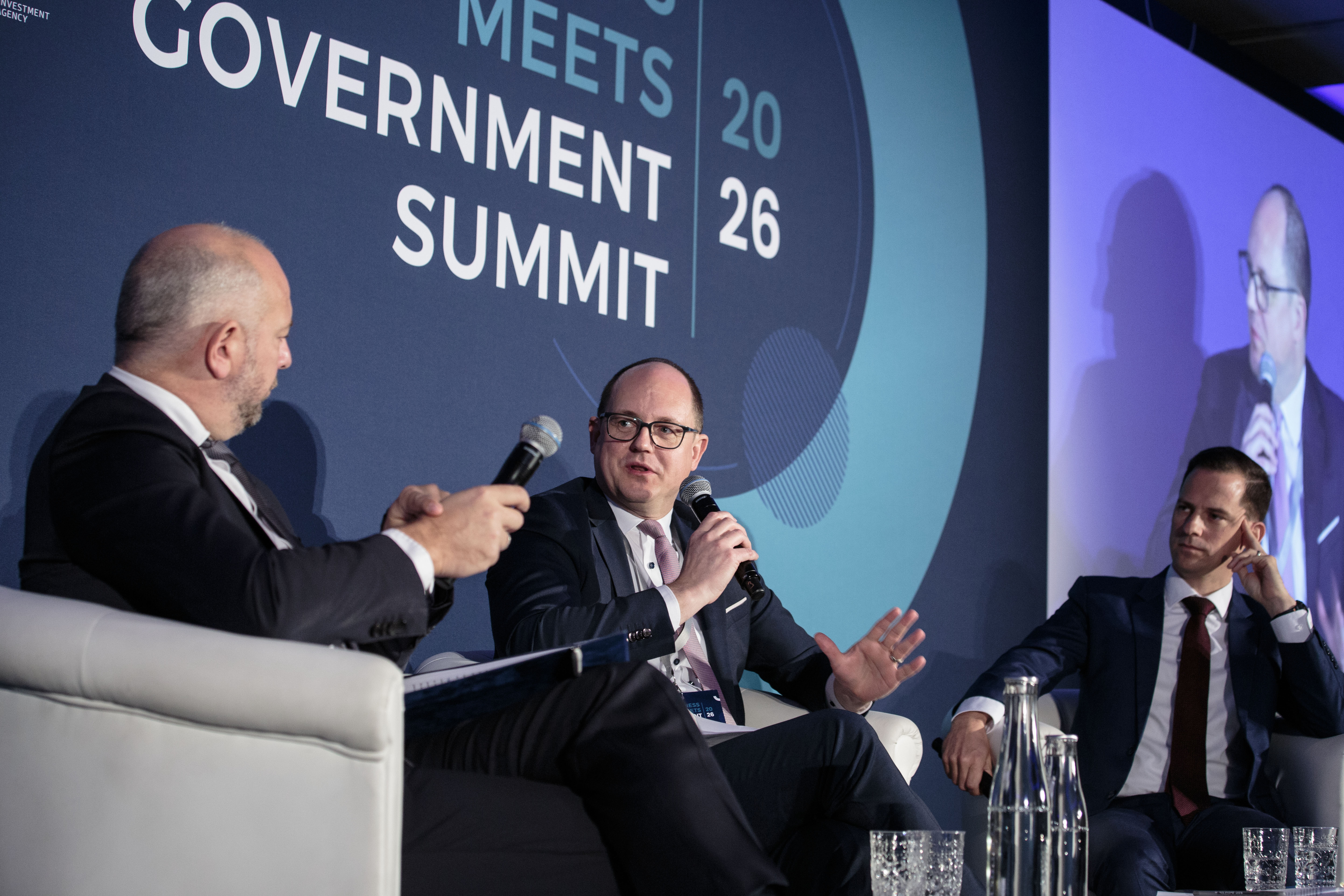
The roundtable discussion, Hungary’s Place in the European Economy featured Senior Director at the Atlantic Council’s Europe Center Jörn Fleck, and CEO of HIPA Bence Buday, moderated by AmCham President Ákos Janza. The discussion explored Europe’s changing global economic position, evolving transatlantic relations, and Hungary’s competitiveness within European value chains. Key topics included investment attractiveness, regulatory predictability, innovation, and opportunities to advance higher-value-added economic activities, looking ahead to Hungary’s economic prospects toward 2030.
Breakout sessions
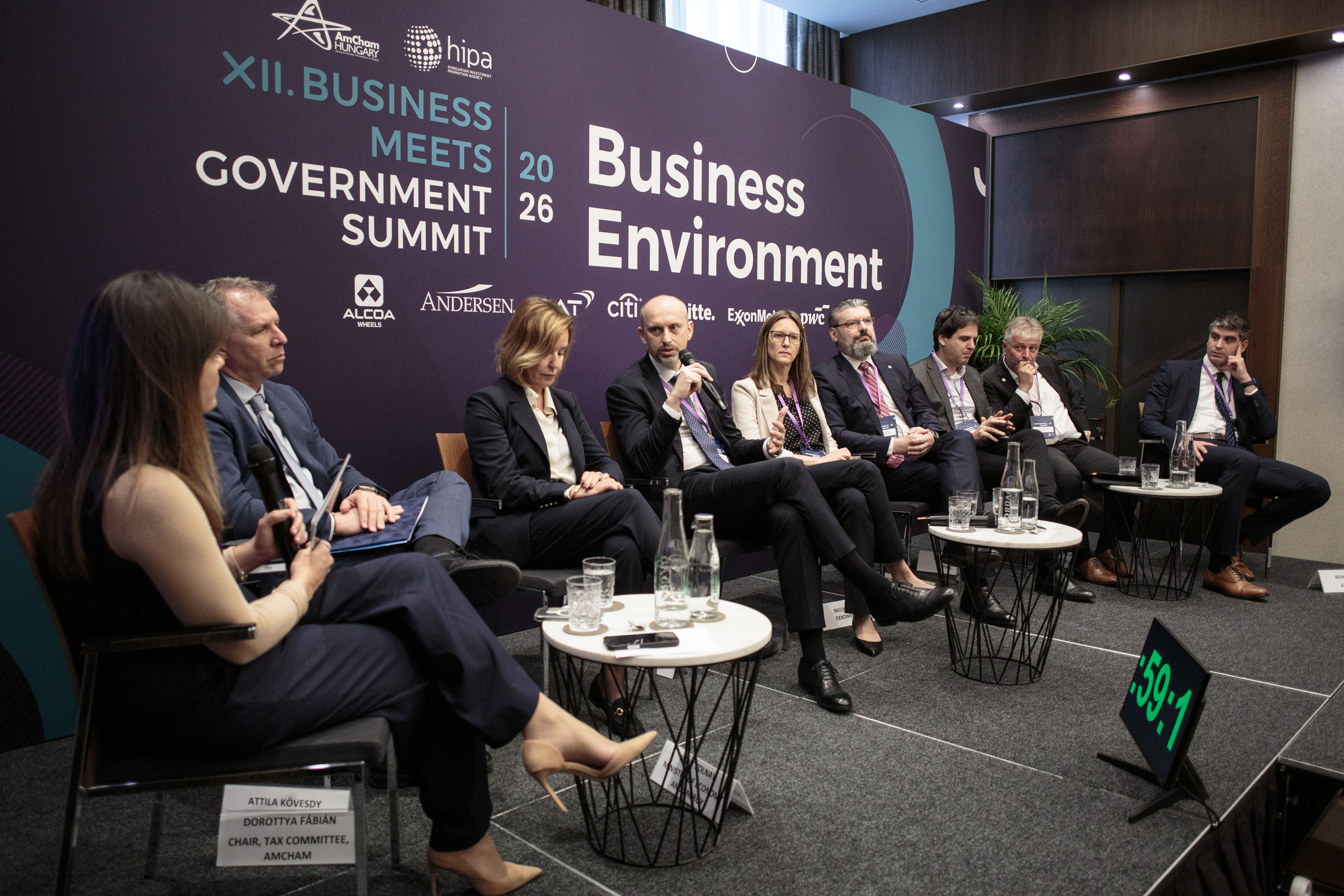
After the coffee break, the summit continued with four breakout sessions. The Business Environment breakout brought together government representatives Judit Zolnay and Attila Kövesdy with business leaders and tax advisors. Discussions focused on Hungary’s investment competitiveness, regulatory predictability, tax reform, investment incentives, and opportunities for practical cooperation to support existing investors and higher-value economic activities. The session was moderated by Dorottya Fábián (Deloitte), Chair of AmCham’s Tax Committee.
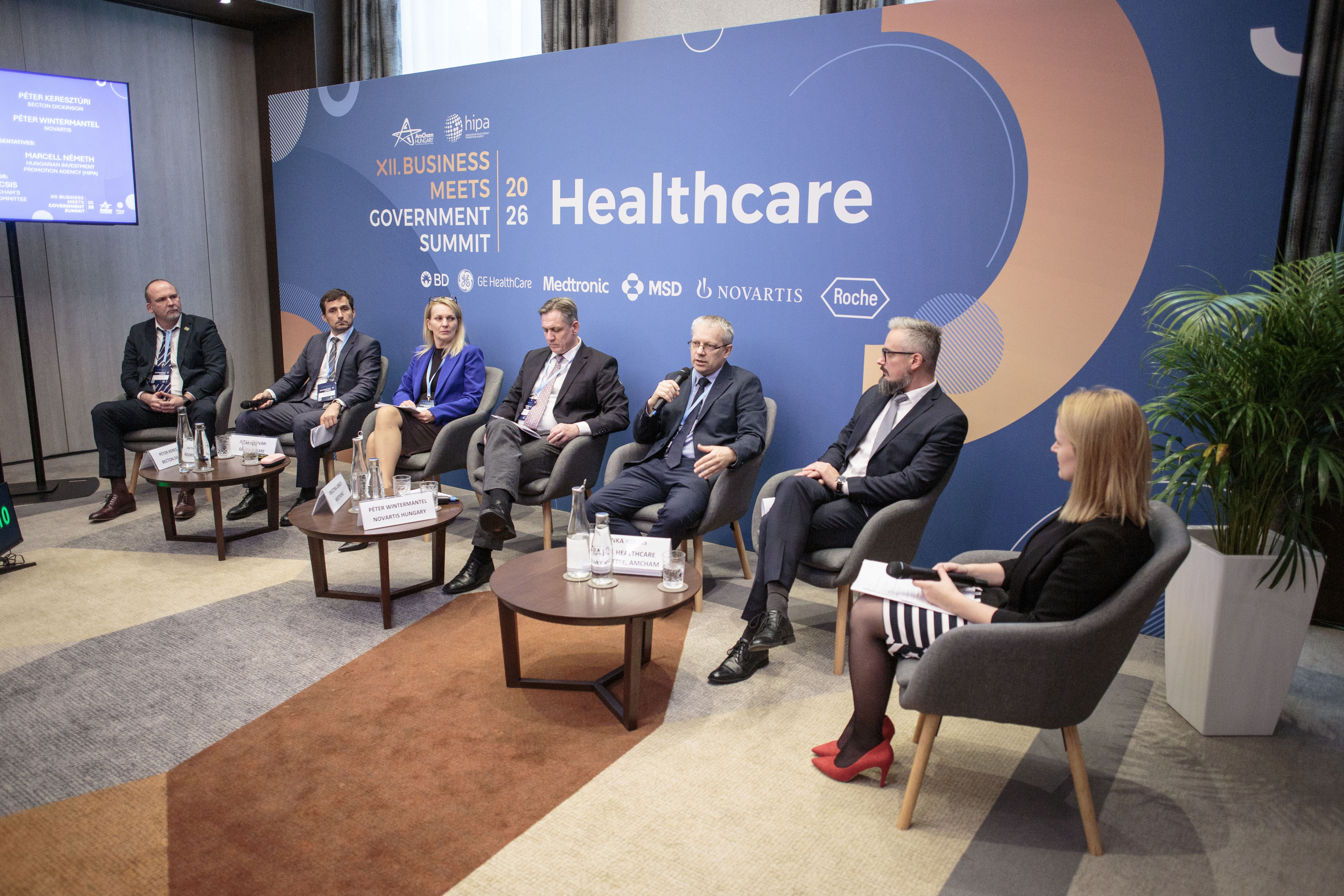
The Healthcare Breakout Session explored how Hungary can attract more life sciences investment, building on AmCham’s new Life Science Investment Attractiveness Study. After MediConcept’s Ádám Csizmadia presented the study’s findings, corporate leaders were joined by State Secretary László Buga and discussed the study’s recommendations and findings in a panel discussion moderated by Janka Kocsis, Chair of AmCham’s Healthcare Committee.
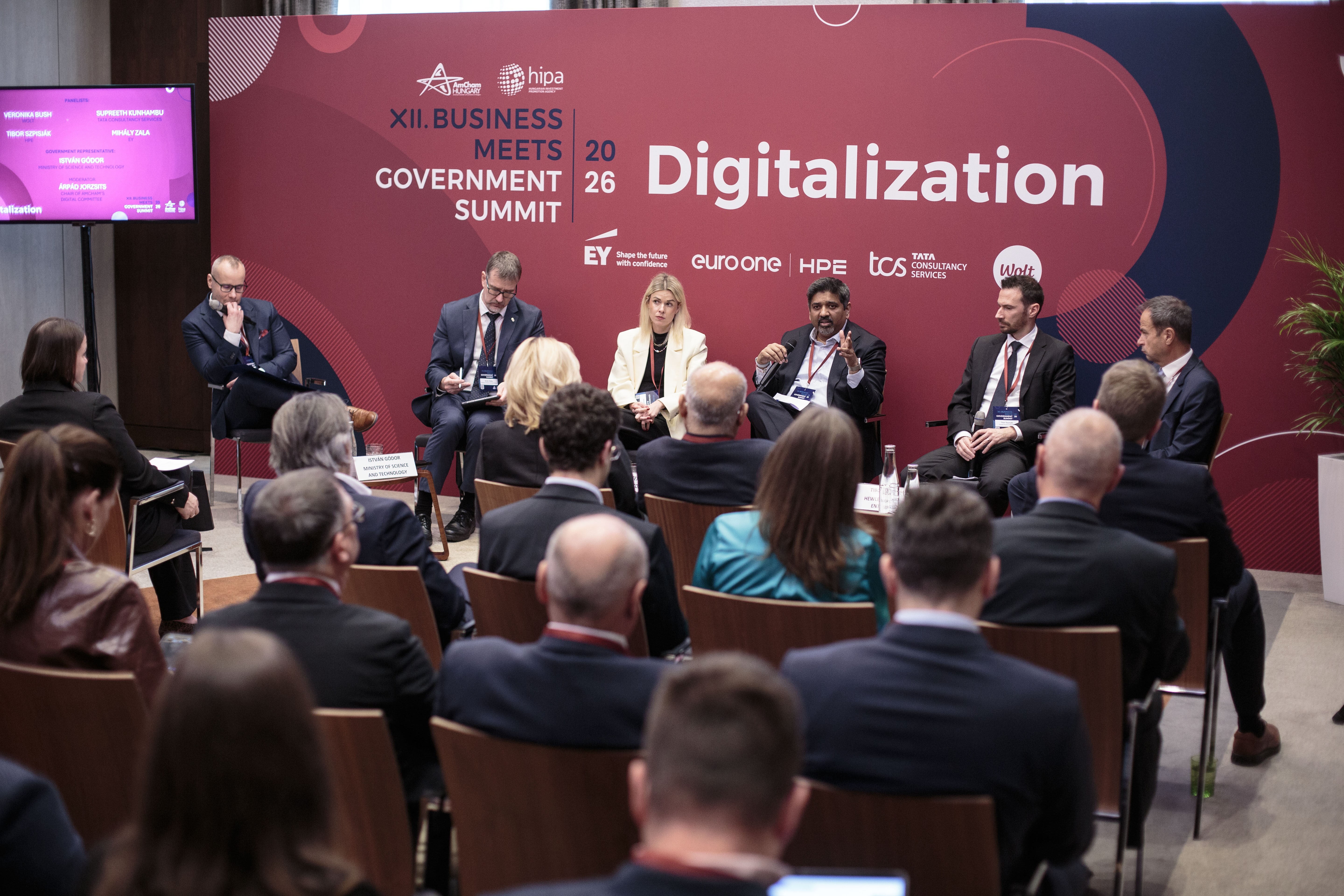
The Digitalization breakout brought together Deputy State Secretary István Gódor with business leaders and technology experts. Discussions focused on AI adoption, digital innovation, cybersecurity, investment opportunities, digital skills, and public–private cooperation to strengthen Hungary’s technological competitiveness. The session was moderated by Árpád Jorzsits, Chair of AmCham’s Digital Committee.
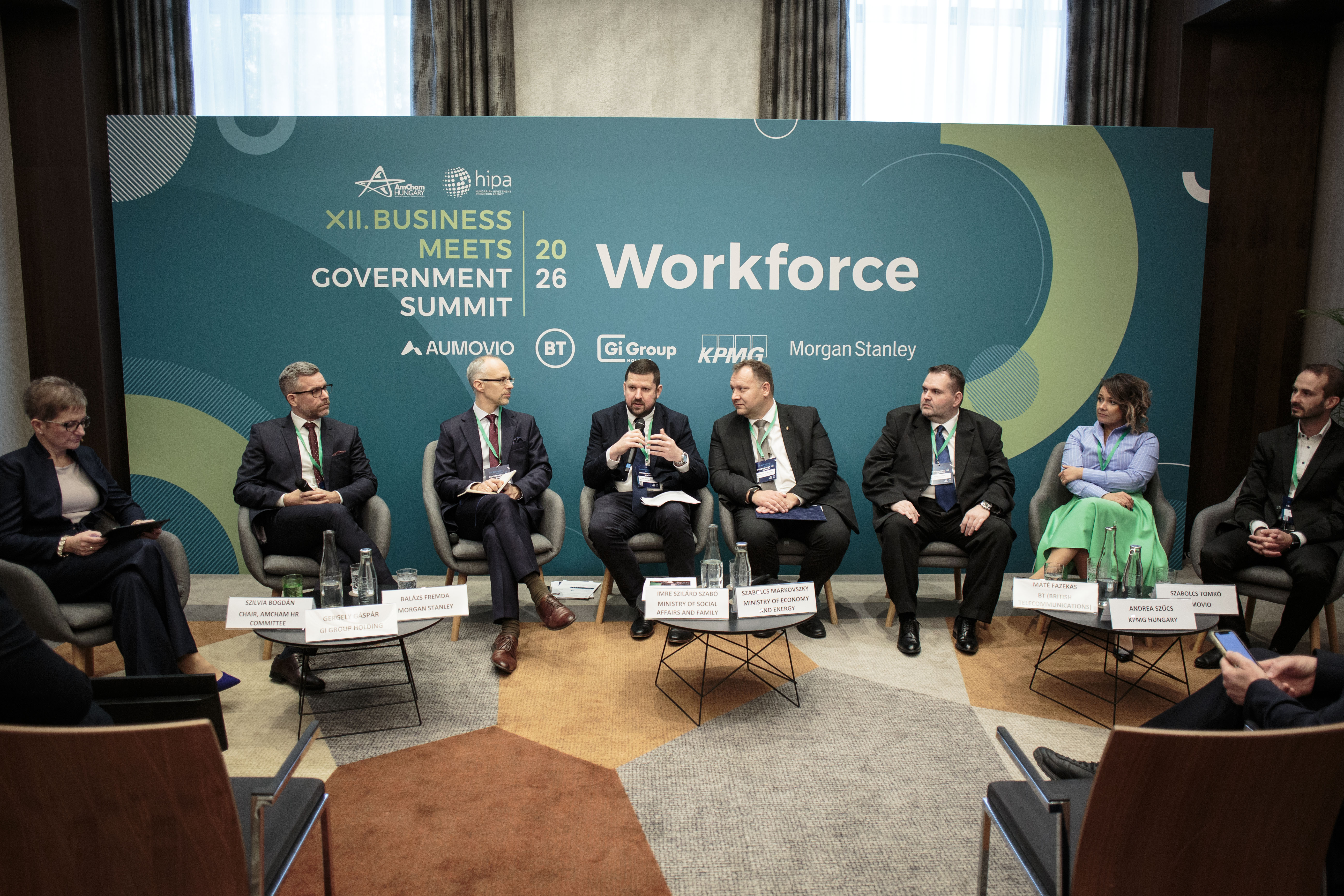
The Workforce breakout featured Deputy State Secretaries Szabolcs Markovszky and Imre Szilárd Szabó alongside business and workforce experts. Discussions addressed labor shortages, skills gaps, wage competitiveness, investment needs, and the employment of third-country nationals, including international graduates. The session was moderated by Szilvia Bogdán, Chair of AmCham’s HR Committee.
Appreciation to our partners
We would like to express our sincere gratitude to our sponsors whose generous support helped make this year’s Business Meets Government Summit possible: **Alcoa Wheels, Andersen in Hungary, AUMOVIO, BAT Hungary, Becton Dickinson, BT (British Telecommunications), Citi Hungary, Deloitte, Hewlett Packard Enterprise-Euro One, ExxonMobil Hungary, EY, GE HealthCare, GI Group Holding, KPMG, Medtronic, Morgan Stanley, MSD, Novartis, PwC, Roche, Tata Consultancy Services (TCS), Wolt, and WTS Klient.