
On November 22, AmCham, together with the IVSZ, organized an HR session focusing on women’s ratio in STEM careers.
At the first part of the event, Nóra Kudari (IVSZ) Tamás Géczi, and Csongor Fényes (INSPIRA Research) shared important insights on their latest study driven by Egyenlítő Foundation, whose mission is to foster workplace inclusion and diversity. They showed how STEM, as a study and career field, ranks in terms of popularity among students, what motivates them to choose STEM, how its position could be improved, and what challenges - especially for women- working in these fields can hold.
Ms. Kudari's insights revealed a nuanced picture: In IT, Hungary outperforms the EU average in terms of students choosing this field for university studies, although this is a still male-dominated area. On the other hand, Hungary, in general (including both men and women) falls below the EU average in crucial areas such as science, where only 1.2% of higher education students are enrolled.
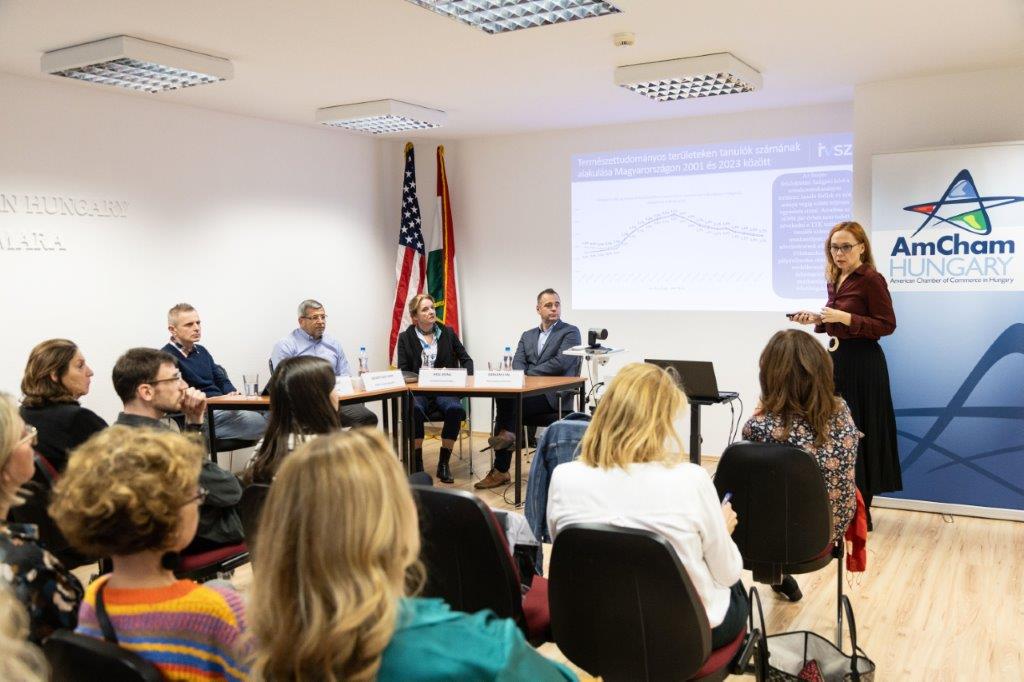
Mr. Géczi and Mr. Fényes underscored the pivotal role played by families and teachers in motivating students to pursue STEM paths. He also talked about whether it is necessary to make STEM fields more attractive for women and how to achieve positive change.
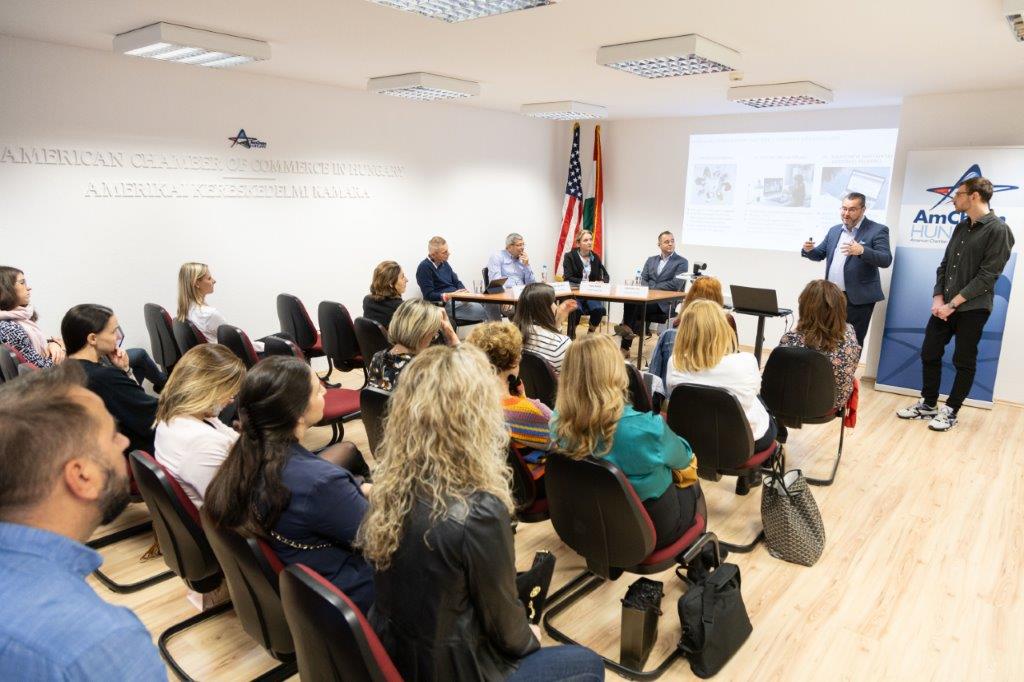
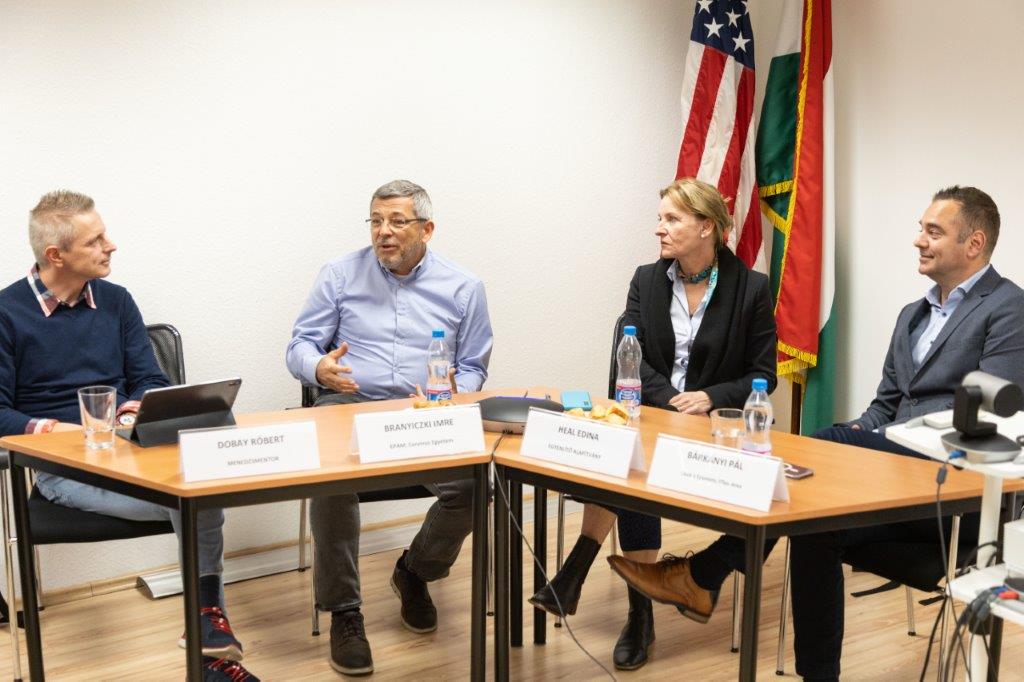
The two presentations were followed by a panel discussion featuring Edina Heal (Egyenlítő Alapítvány), Dr. Pál Bárkányi (Óbuda University, ITSec Area), Dr. Imre Branyiczki (EPAM, Corvinus University) and Dr. Róbert Dobay (Menedzsmentor), AmCham HR Committee Chair, moderator. The panel explored how companies can contribute to advance gender diversity in STEM and what benefits this can bring for them. The experts noted that hiring women in STEM fields enriches teams with diverse perspectives, fostering innovation and improving overall team dynamics. They stressed the importance of initiatives such as mentorship programs for university students and recent graduates, as well as open days to familiarize young individuals with STEM career paths.
All in all, the key takeaways were that STEM education and careers in Hungary require more focus. Furthermore, discussions underscored the collective responsibility of educational institutions, families, teachers, and businesses to bridge current gaps and cultivate a more inclusive and vibrant STEM community.
More photos are available in the gallery.