
On the occasion of the capital's 150th anniversary on April 18, AmCham invited Mayor Gergely Karácsony to a Business Forum where the Mayor introduced the plans of the Municipality regarding the development of the infrastructure, housing, and greening of the capital.
In his presentation, he first underlined that Budapest accounts for 38% of Hungary’s GDP per year.
Nevertheless, the city's development is hampered by the fact that the revenues of the capital's municipality have been significantly decreased since 2019. At that time, its revenues were equal to 0.57% of the GDP, but in 2022 they contracted to only 0.44% of the GDP.
Besides the reduced budget, another challenge is that the city's population is shrinking, while the number of suburban residents is increasing. This can be explained by the rising property and rental prices and the growing demand for green spaces at the same time.
The municipality’s aim is to build at least 7,000 new community homes per year by 2027, for a total of 50,000 new homes, and to add at least 700 collective residencies to the affordable housing stock by 2027.
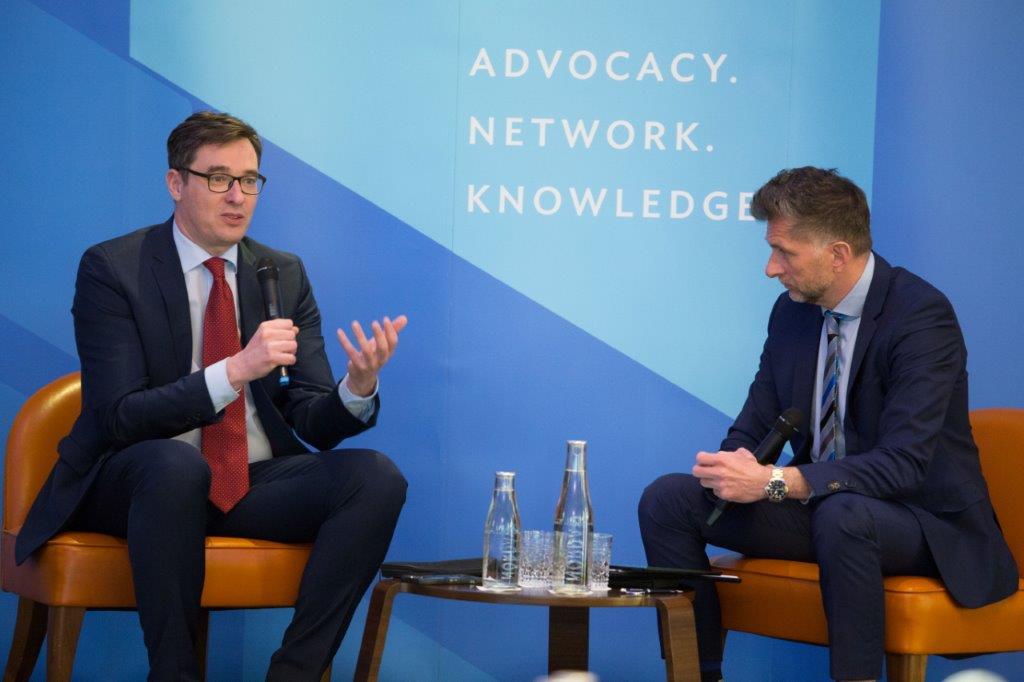
To ensure that the city remains attractive in the long term, infrastructure improvements will be also addressed. Mayor Karácsony noted that the length of the main bicycle and micromobility network would be doubled by 2030. The 2030 targets also include bringing automobile use to 20% considering all the different means of transport, covering half of transport by public transport and increasing the number of cyclists and walkers to 10% and 20% respectively. By comparison, the modal split (counted based on the number of journeys) in 2017 was the following: 40% automobile, 47% public transport, 11% walking, 2% cycling.
Reforms in transportation are important steps towards greening the city and contribute to the ambitious target of reducing carbon emissions by 40% in the next 8 years. Green space development would also make a valuable contribution towards a more sustainable capital city. The Municipality foresees the increase of the area of green spaces per Budapest inhabitant by 1 m2 by 2030, resulting in 7m2 of green space per capita by 2030. The amount of protected natural areas would also be increased.
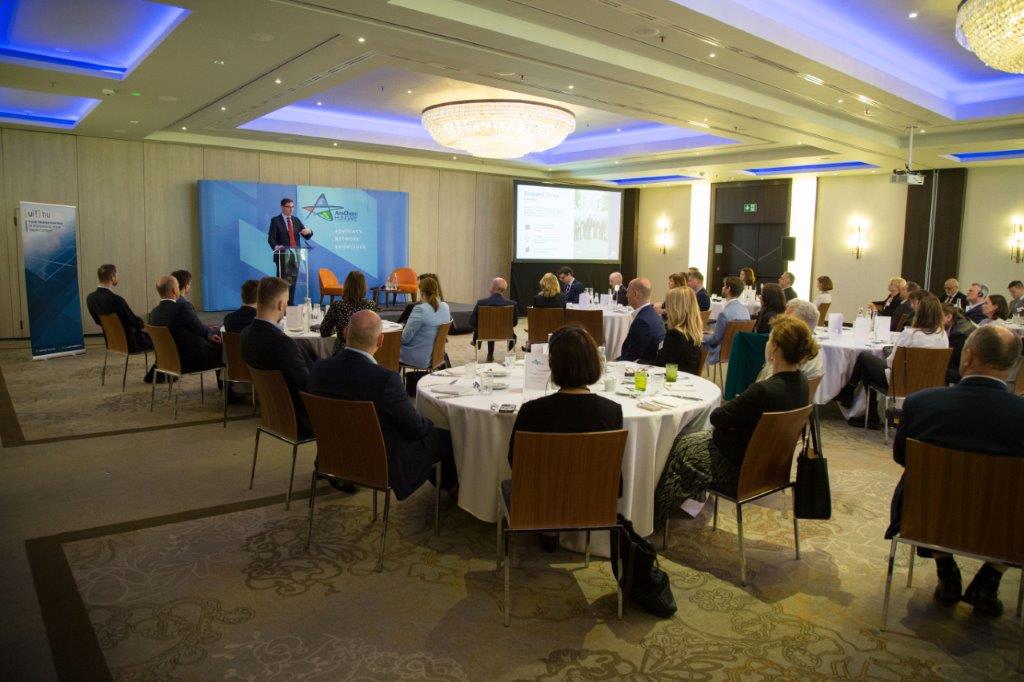
Mayor Karácsony also stated that developing Budapest into a globally connected, competitive and livable city requires cooperation between businesses and the municipality. To establish and improve the cooperation between private and public stakeholders including business organizations and knowledge hubs, they have created a new platform, called Budapest Global to which companies are invited to apply.
Click here to access the Photo Gallery.