
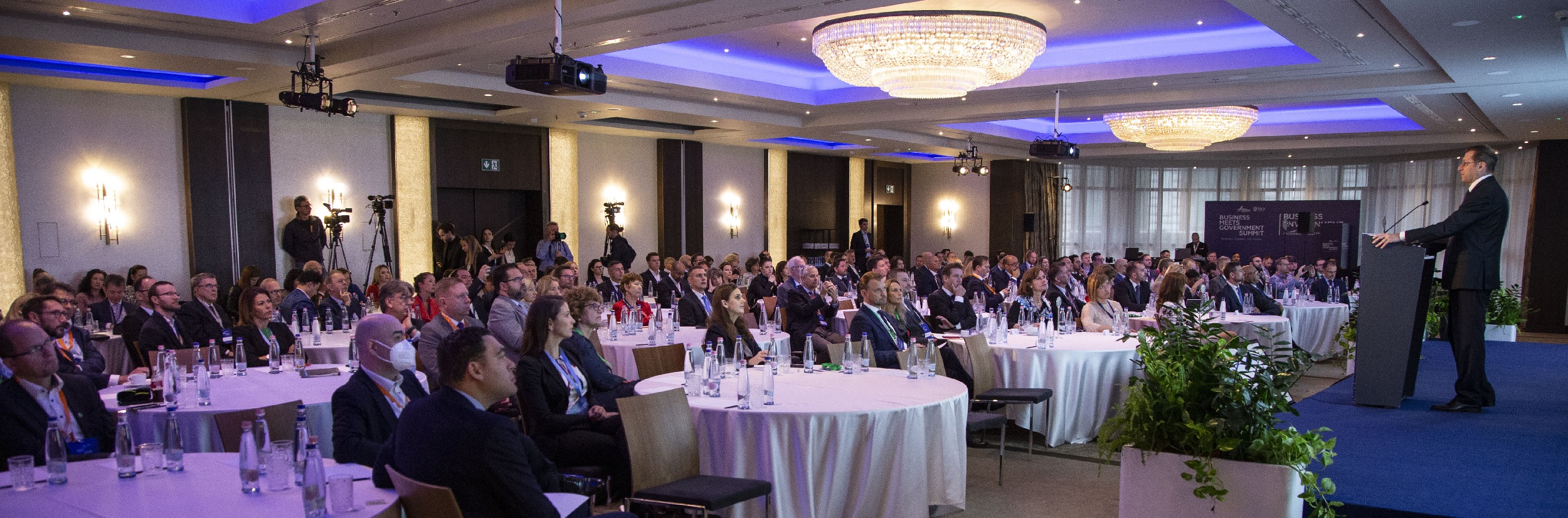
Unity, cooperation and building resiliency are the key to overcome economic slowdown – this was the consensus among speakers of the VIII. Business Meets Government Summit, organized by AmCham and HIPA with the intention to connect stakeholders of the business community and governance to examine the geopolitical and economic landscape of Hungary and Europe on October 24.
At the previous BMG last October, our focus was on the main challenges at the onset of a long economic recovery after the pandemic years. The direction has changed drastically with the Russian invasion of Ukraine that plunged Europe into further uncertainty, drove up inflation to record highs, consumer sentiment to record lows, caused an energy crisis, deep supply chain issues, prices skyrocketing, and overall, a massive economic slowdown, forcing business leaders to face the second economic and societal crisis within two years.
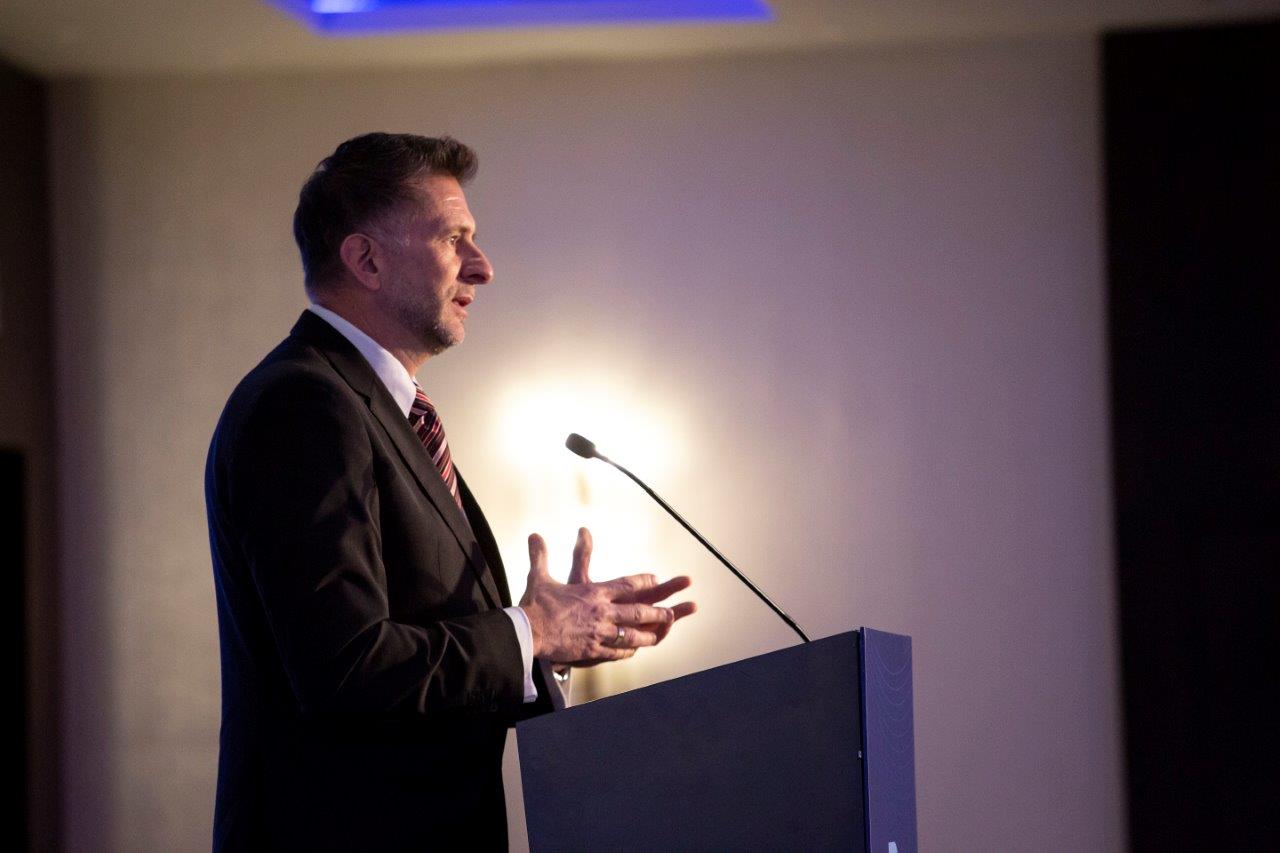
“Only a day apart from commemorating our own revolution against the Russian aggression in 1956, we Hungarians shall understand more than probably everyone else in Europe the tragedy happening at our neighbors’" - said President Zoltán Szabó in his welcome remarks where he urged government leaders to cooperate more openly and directly with the leaders and experts of the business community to avoid recession and put the country back on track for growth.
Further slowdown expected, but recession can be avoided
In his keynote speech, Minister of Finance Mihály Varga told the audience that Hungary has already surpassed its pre-pandemic GDP level and remains one of the fastest growing countries in Europe. With its sound economic fundamentals, the country is capable to withstand economic shocks, and our ability to attract investments remains particularly high – he added.

Hungary’s growth is well diversified and supported by structurally high levels of consumption and investment; and the country’s capacity to withstand economic shocks have increased because of the sound economic fundamentals.
For 2022, Minister Varga says the GDP growth is projected to be 4%, but a slowdown is expected in the first half of 2023 before accelerated expansion in the second half of the year.
In response to the crisis, Minister Varga said the government’s main objectives are to preserve growth, protect the household purchasing power to streamline taxes, launch subsidies for energy-efficiency investments at big companies and support energy-intensive SMEs while preserving the fiscal balance.
Economic Relations with US Remain Strong
Minister Varga said economic relations are the cornerstones of the historic bilateral ties between Hungary and the U.S.
„The United States is Hungary’s most important export partner outside of Europe. Our bilateral trade accounted for 7.1 billion USD last year, with Hungary’s export being 4.15 billion USD, and our import 2.95 billion USD” – he said.
The United States is the largest foreign investor outside of the EU with more than 1.700 US companies in the country employing approximately 110.000 Hungarian people.
Attracting investment a top priority amid crisis
In his opening remarks, István Joó, CEO of HIPA, the coorganizer of the event, outlined the steps the agency has taken to improve the competitiveness of the country from prioritizing high value-added investments, speeding up ongoing investor negotiations, accelerating industry park-related infrastructure developments, supporting the energy efficiency of large corporations and consulting with corporations on proposals.
European Unity and Resiliency
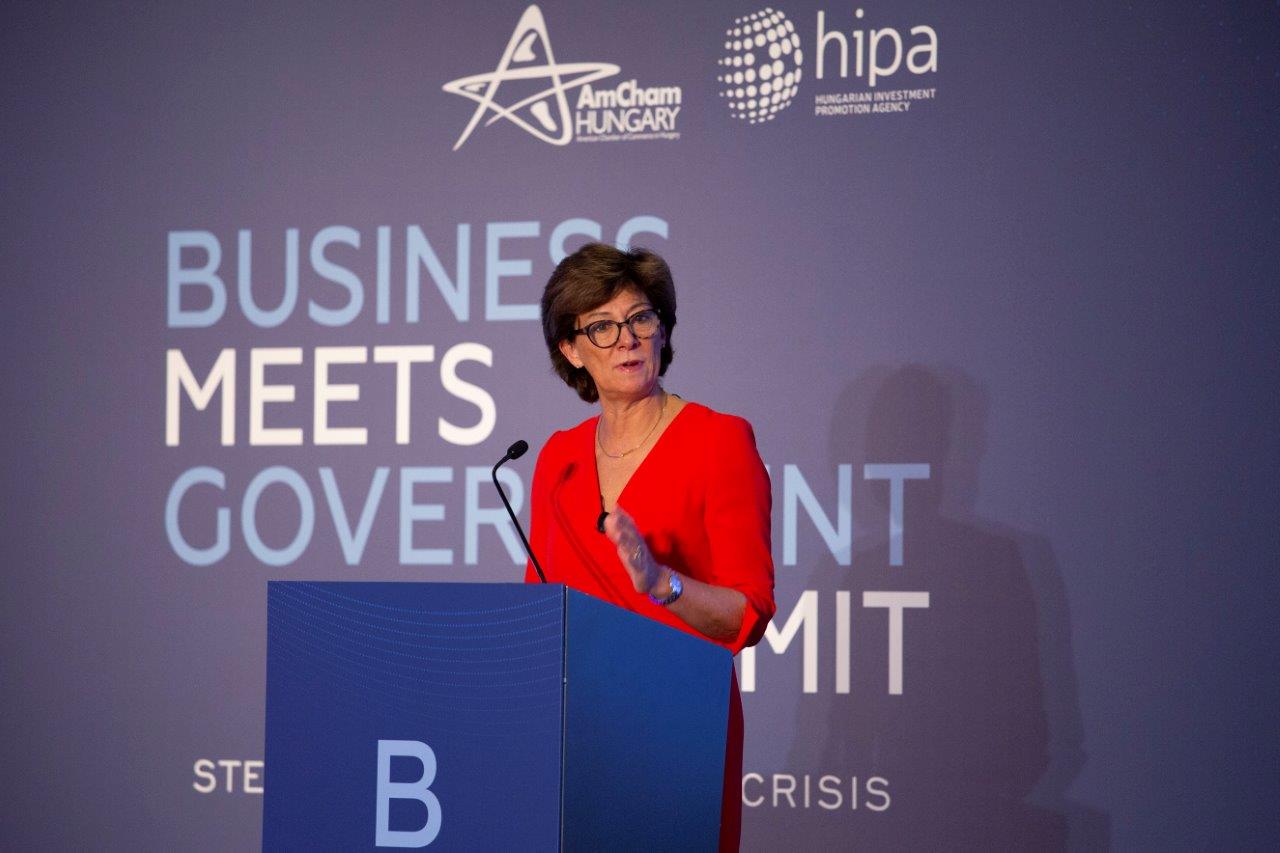
Susan Danger, CEO of AmCham EU and Chair of AmChams in Europe joined the conference from Brussels to talk about why the transatlantic relationship between Europe and the United States is so important today and how European unity and cooperation is an essential part of the solution to the concerns we are facing today.
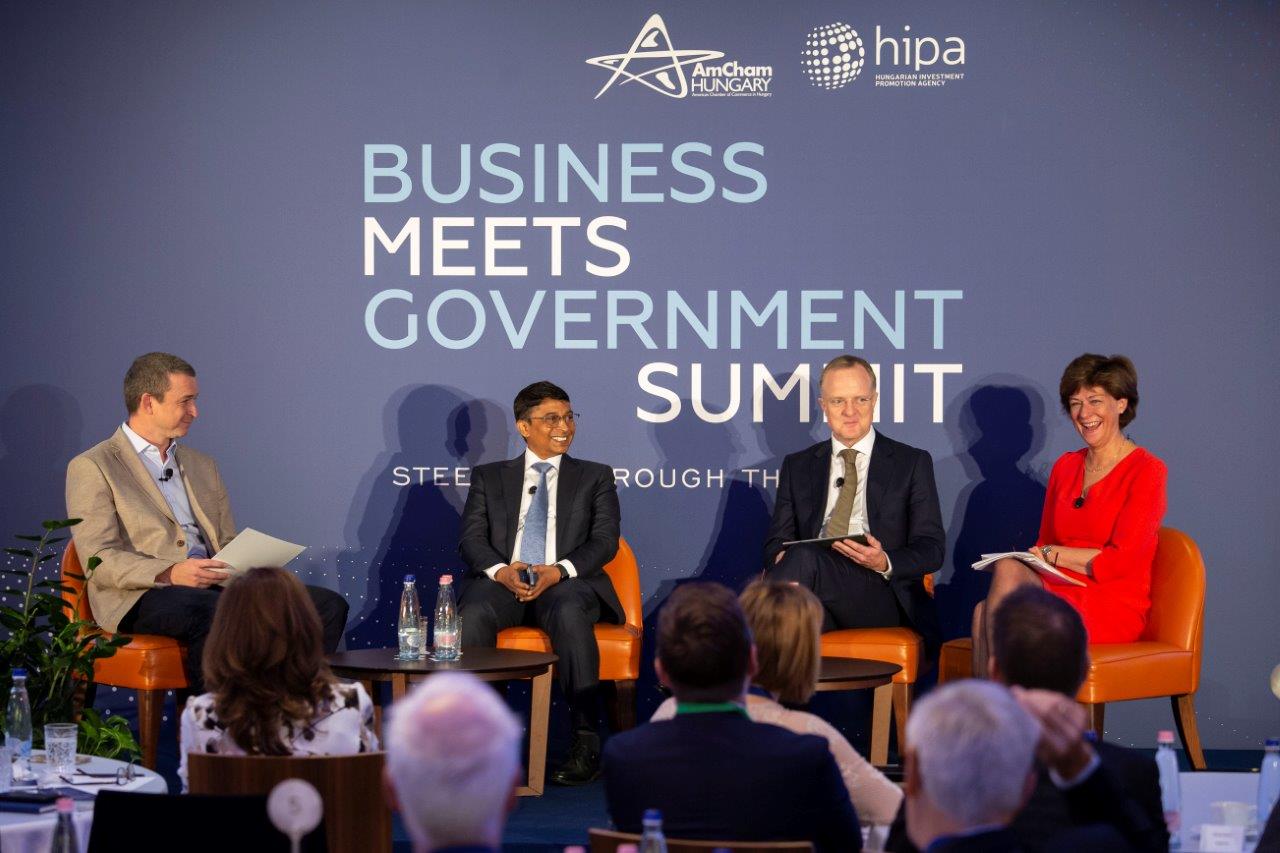
Ms. Danger was later joined by Sapthagiri Chapalapalli, Head of TCS Europe, Liam Benham, Vice President of Government and Regulatory Affairs at IBM Europe and moderator Márton Dunai, the South-East Europe Correspondent of Financial Times for a panel discussion on the fundamental challenges of Europe’s competitiveness, and how businesses adapt and build resiliency during crisis.
Breakouts
Following the plenary segment, participants of the conference further explored today’s issues. In the energy security breakout, experts discussed the supply imbalance, pricing issues, Hungary’s short and mid-term energy and climate strategy.
The labor and employment discussion touched upon the main challenges of the current labor market, adult education programs and subsidies as well as the importance of a skill-based education.
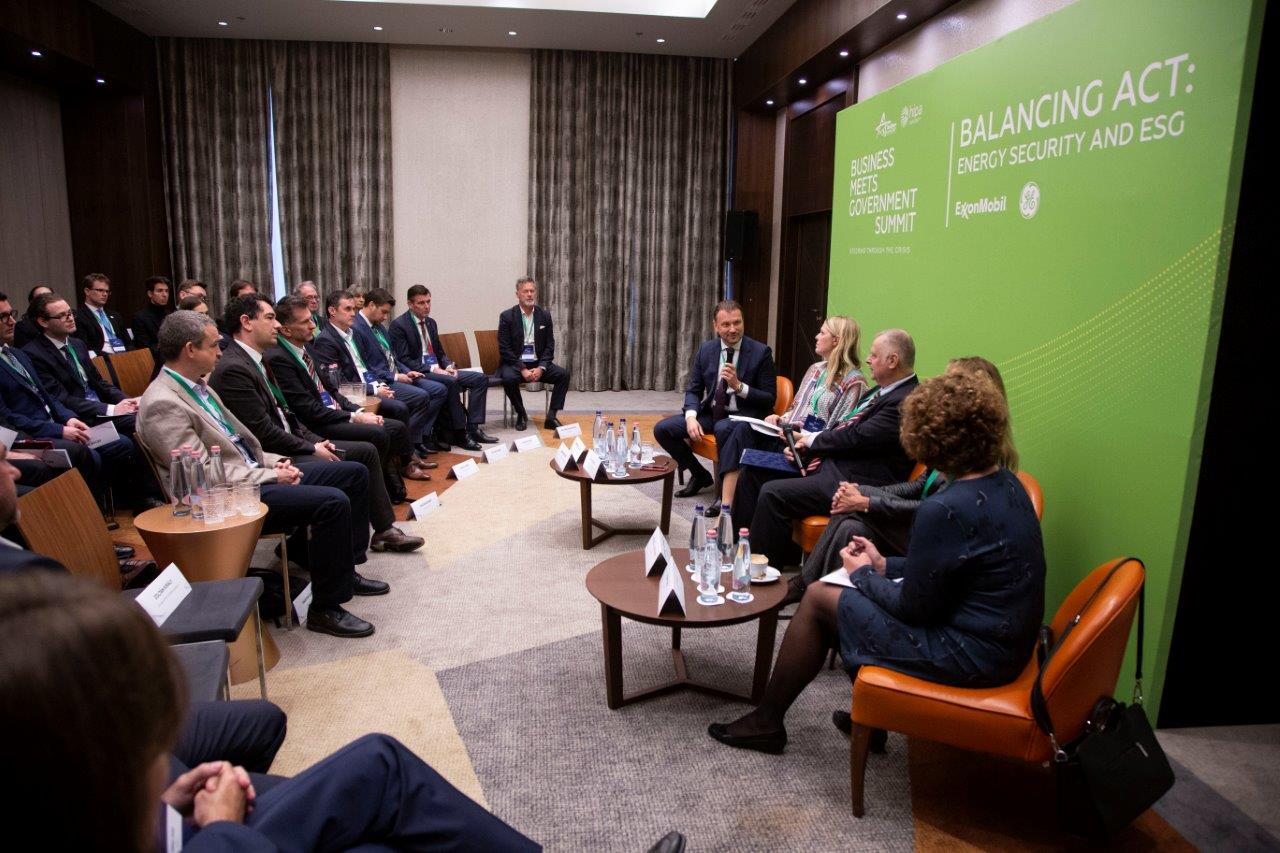
In the business environment segment, our panel talked about how we can attract FDI in volatile times, discussed the plunge of the forint and managing inflation, managing the state budget, as well as the termination of the US-HUN double taxation agreement.
Last but not least, the healthcare breakout assessed challenges and questions of the transformation of the healthcare system.
AmCham Hungary would like to thank Amgen Hungary, Andersen in Hungary, Arconic Köfém Mill Products Hungary, BT, Celanese Hungary, Citi Hungary, ExxonMobil, GE Hungary, IBM Hungary, The Janssen Pharmaceutical Companies of Johnson & Johnson Hungary, Medtronic Hungary, Novartis Hungary, Philip Morris International Hungary, Tata Consultancy Services Hungary, WHC Ltd Hungary, and of course our partner Hungarian Investment Promotion Agency for making the event possible.