

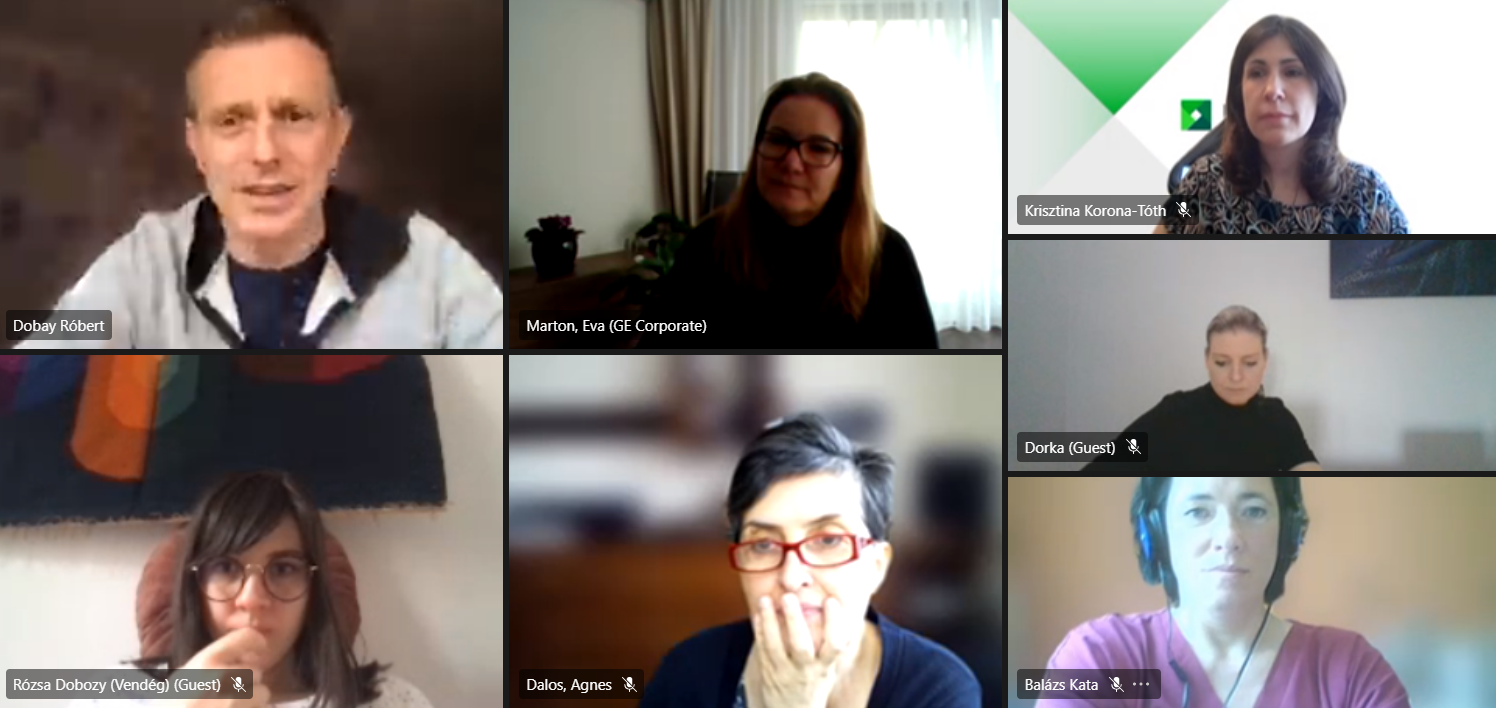
On April 16, the Competitive Workforce Policy Task Force invited UNICEF, ProMoms, Lexmark and GE to talk about a controversial topic, the employment of women with small children.
There is a comparatively low activity level in this group, therefore they offer a substantial labor reserve that must be activated through flexible and atypical employment options as well as reskilling. At the meeting, we discussed two recent studies to learn more about this issue and introduced corporate best practices designed to support the reintegration and flexible employment of mothers.
Study highlights and conclusions
Hungarian society seems to have contradictory expectations towards mothers of young children. On the one hand, they are expected to participate in the labor market and contribute to the financial security of the family, on the other hand, they are not seen as „full value” at work and are responsible for the majority of tasks related to raising children and running the household. When searching for a job, many of these women do not even consider applying for more senior positions, as they fear that they would not be able to reconcile their domestic responsibilities with a fulfilling, but demanding carrier. More family-friendly workplaces and atypical forms of employment could help the work-life balance of the mothers of young children, but not without a change in social attitudes, when it comes to the sharing of family and household tasks. A significant increase in the social prestige of “invisible” and unpaid domestic and care work would also be necessary to properly recognise the value provided by these women. These are the conclusions of a comprehensive social study carried out by UNICEF Hungary and Indotek Group in 2019-20, presented by Kata Balázs, communications head at UNICEF Hungary.
ProMoms, a digital movement and platform, with a vision to advance fair and expertise-based employment opportunities for all working mothers also presented findings of their survey, conducted among 540 moms and 30 large corporations in early 2021.
Co-founders Zsófia Valkó-Juhász, Rózsa Dobozy and Dorottya Drén highlighted that 50% of mothers surveyed can not return to their previous position, due to long working hours, lack of flexibility or family friendliness of leadership, distance from home, termination of their position, or the unwillingness of the employer to take them back. Shockingly, over a quarter of respondents have been discriminated against as working moms either during job interviews or as employees and a staggeringly low 9% responded that Hungarian job portals offered relevant positions matching their skillset and flexibility needs.
„The Motherhood Penalty, a phrase coined by American sociologists, is a global phenomenon of mothers facing systematic disadvantages in wages and perceived competences relative to childless women. Stereotypical gender role expectations create obstacles for mothers reentering the workplace, normative conceptions of an "ideal worker" and "good mother" create cultural tension and discrimination. An additional barrier is that women don’t prepare for their post-maternity careers.” – said Valkó-Juhász.
Leading the way: corporate best practices
“Lexmark Hungary kicked off a project last year with the aim to find a common ground between company needs and the maternity leavers. Enhancing employee’s engagement on return is a net win to both parties. Our company is committed to not to lose experienced and talented workforce for years: managers are prompted to rethink their teams, find possibilities to flexible jobs, and help career planning of their team members having a baby. We believe that colleagues being on parental leave are motivated by keeping their finger on the pulse - as information is power. Thus frequent communication, transparency and a special support network (Mom Buddies) are key.” – highlighted Krisztina Korona-Tóth, volunteer Maternity Leave coordinator at Lexmark in her presentation.
GE also presented the story and best practices of GE Working Parents Program which became a social innovation not only in GE Hungary but globally within the GE entities across the word. GE as a Mentor Company for Family Friendly Companies founded the bottom to top initiative in 2012 and built a cross country-cross business standard program for Working Parents. The program is not only a network but organizing professional programs, facilities (like child friendly offices, breast feeding corners, parking places for expectant mothers etc.) for parents and several events for their kids covering all the ages of GE children: Baby massage, New born welcome program, Babies’ Club, GEnie - the virtual Nanny, Santa, Summer camp, Student exchange program, Career orientation week etc. GE also offers several solutions for atypical employment helping working parents to balance their life and work.
Éva Marton, Working Parents Program Leader said that they think even a profit oriented company can take advantage if they invest in family friendly innovation, thus having more loyal employees working for the company. She also highlighted the importance of the active two-ways communication between the company and mothers/fathers on maternity/paternity leave.
“This is not just employer branding but we can keep and motivate our employees if we are a family friendly company. The Working Parents Program run by GE voluntary team, supported by HR and business leaders. We believe that we can help the GE kids through their GE working parents. As American psychologist and professor Philip Zimbardo said in his welcome message in one of our traditional GE Working Parents Day: happy workers are effective workers" – Marton added.
AmCham is open to continue working on the issue of employing mothers and atypical employment schemes at a broader level, from both a policy and a best practice angle. Should you with to continue the discussion that we started, please get in touch with Zsófia Juhász at zsofia.juhasz [at] amcham.hu (zsofia[dot]juhasz[at]amcham[dot]hu)!