
AmCham, together with HIPA organized the Business Meets Government summit for the 9th consecutive year. This time our event was centered around the question of how business leaders can adapt to economic and geopolitical challenges to deliver their constantly increasing business targets.
In today's fast-evolving business landscape, characterized by numerous transformative changes and challenges, the need for resilience is paramount at multiple levels: individual, company, and even the state level. From an economic perspective, Hungary requires higher added value investments to both sustain and enhance its competitiveness. American and international companies have proven instrumental in facilitating and driving this change to a significant extent. This overarching conclusion emerged as the central theme of this year's Business Meets Government Summit, our advocacy flagship event that brings together key stakeholders from the business and public sectors.
Nearly 200 professionals gathered to participate, including leaders from top investors, government leaders, think-tanks, and academia. The opening remarks were given by Levente Magyar, the Deputy Minister of the Ministry of Foreign Affairs and Trade, who was followed by Írisz Lippai-Nagy, AmCham Hungary CEO, Zoltán Szabó, AmCham President, and Rita Szép-Tüske, Deputy CEO of Hungarian Investment Promotion Agency – HIPA.
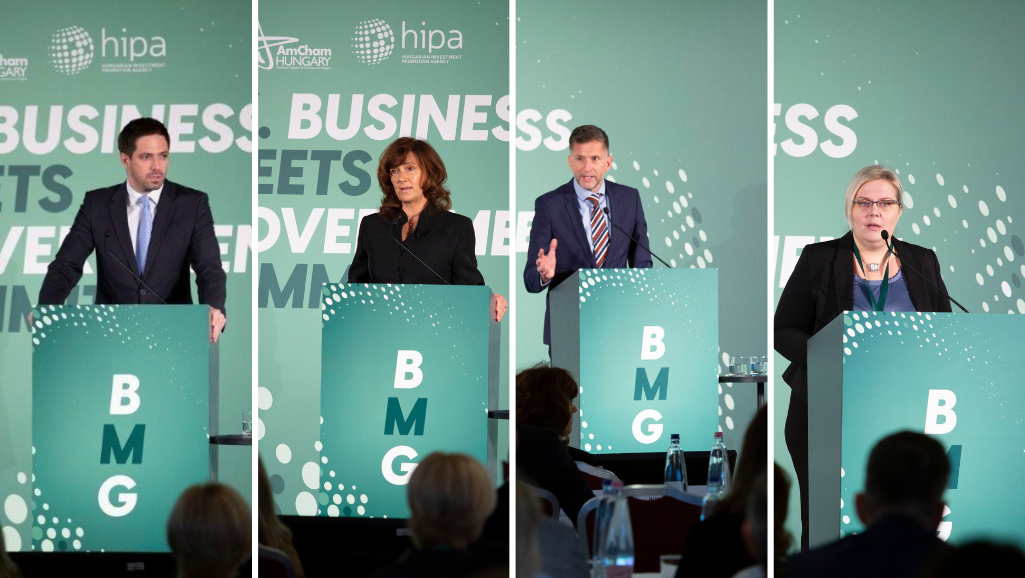
In her opening remarks, Írisz Lippai-Nagy, CEO of AmCham Hungary underlined that the summit served as a highlight of AmCham’s continuous advocacy efforts, which have involved ongoing consultations throughout the year including a unique collaboration of several international chambers of commerce, resulting in joint policy positions on Education and Healthcare, as well a Business Forum with the Minister of Interior, Sándor Pintér to address these two strategic areas and initiate regular consultations. The Summit in this regard, has been a continuation of this work, where beyond the current situation of healthcare, participants could engage in a dialogue on the state of the business environment, energy, and workforce, all of which are essential to improving Hungary's competitiveness.
The Keynote Speech and Panel Discussion
At our keynote “Safeguarding Economic Security Without Doing More Harm Than Good," featuring Jeromin Zettelmeyer, Director of Bruegel - a renowned European think-tank specializing in economics - delved into the pressing issue of protecting the economic security of the European Union in the face of various challenges. From the disruptions in global supply chains caused by the ongoing Covid-19 pandemic to the energy price fluctuations following the Russian invasion of Ukraine, as well as the concerns surrounding the dependence on critical raw materials from China, several unprecedented issues have raised recently.
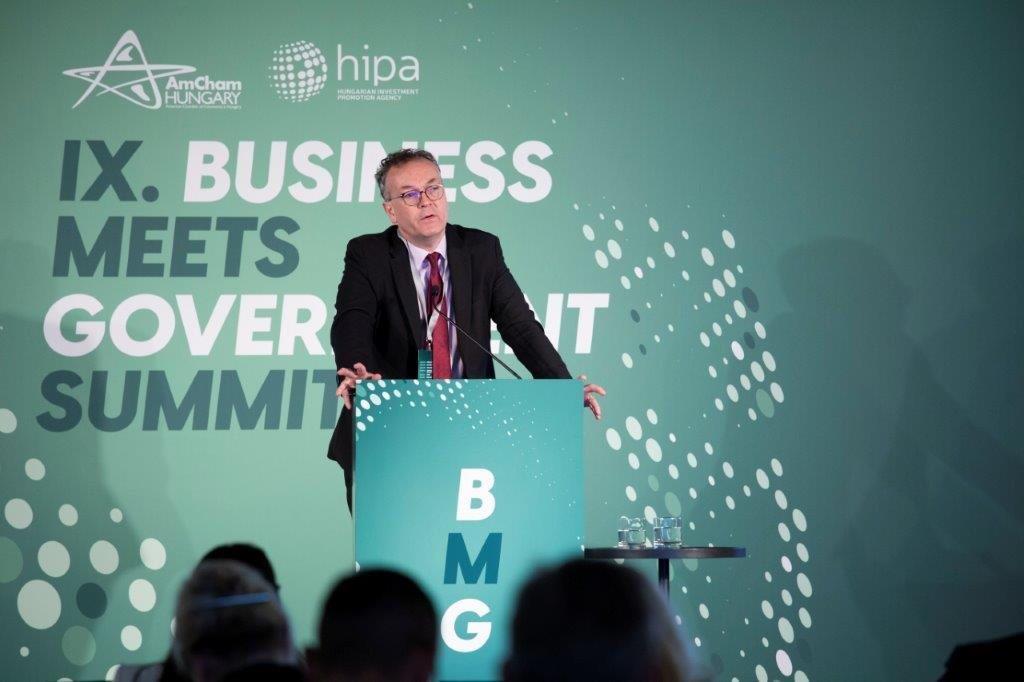
Amidst these challenges, according to Mr. Zettelmeyer, we need to give higher priority to polices promoting economic security. On the other hand, we need to understand and manage trade-offs between economic security and other economic policy objectives such as competitiveness or the protection of the single market. He also highlighted the need of identifying economic security risks before acting.
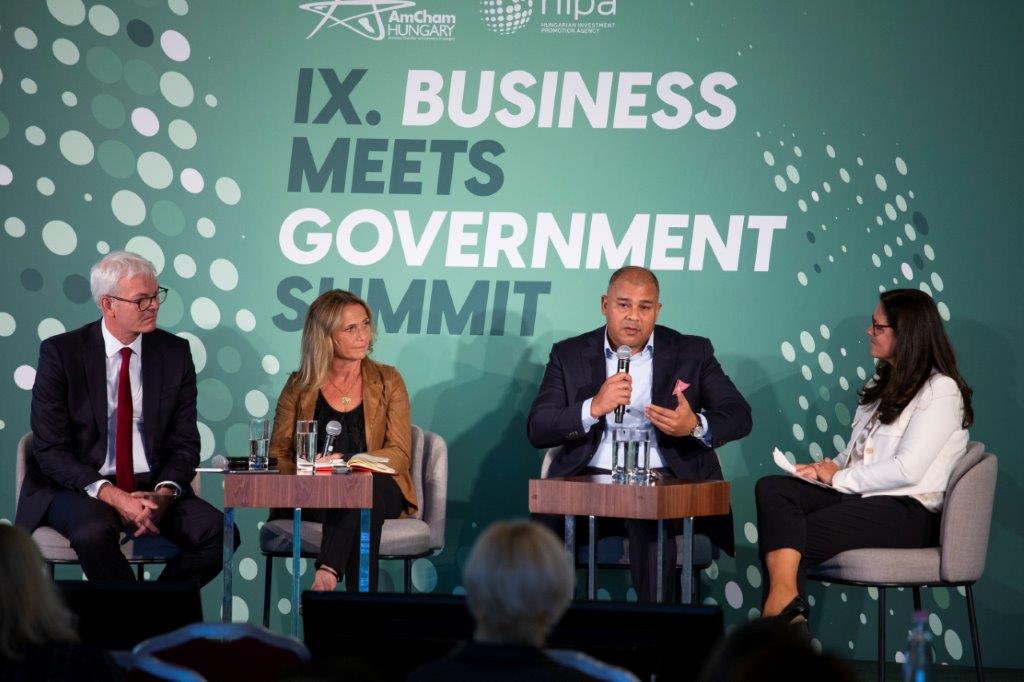
Mr. Zettelmayer’s keynote was followed by an engaging panel discussion focusing on the business environment and resilience in leadership, where participants shared interesting examples and personal stories. Panelists agreed that to adopt to the fast-evolving business expectations, leaders must concentrate on their own and the employees’ well-being and resilience first.
Breakouts
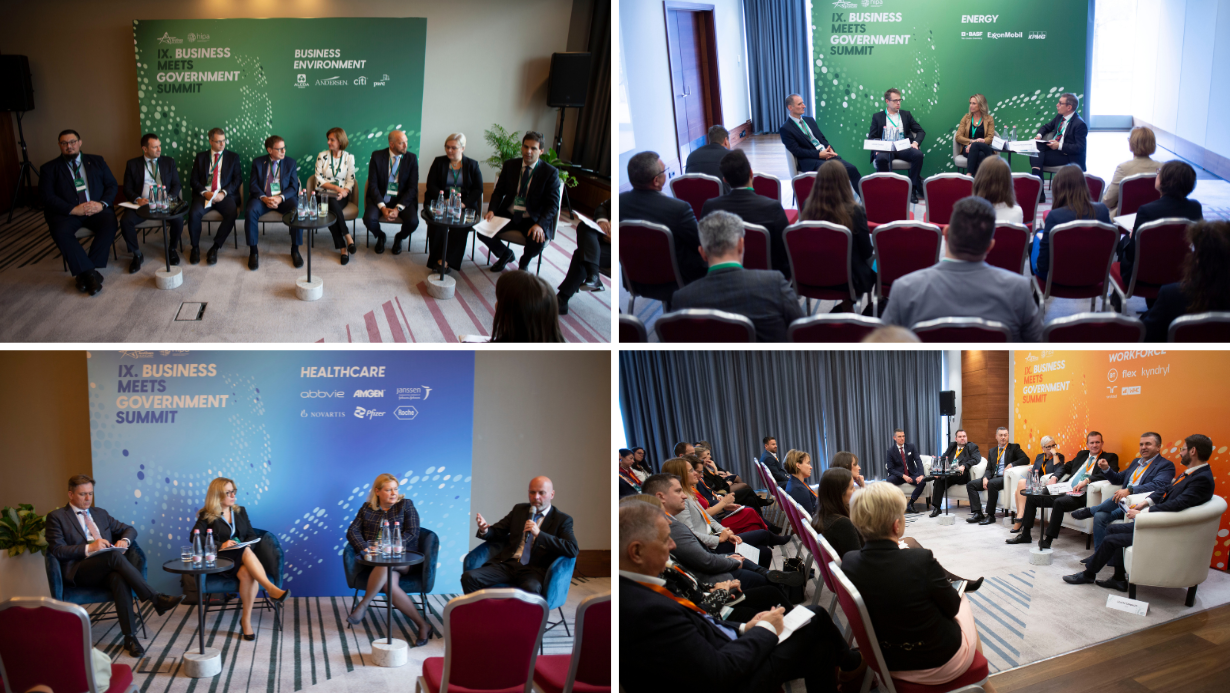
Following the plenary section, participants of the conference further discussed today’s issues. In the business environment breakout, our experts shared their view on several paramount questions, among others, digitalization (AI), the state of EU financial resources, global minimum tax and the prospects of the US-Hungarian, the Double Tax Treaty and the challenges of ESG, both from the aspect of investments and manufacturing.
During the energy breakout, experts addressed energy transition, including Hungary’s short and mid-term energy strategy, the EU’s 2040 climate targets from this angle, and companies’ role in this transformative process.
In the parallel healthcare session, with our guests we talked about the latest and most pressing developments in healthcare with key government decisionmakers. The topics focused on the status of the ongoing transformation in healthcare, questions of supply security, hospital debts, patient’s access to innovation, the legal and taxation environment for healthcare companies.
The workforce discussion focused on the main challenges of the current labor market, such as skills shortage and general scarcity of hard-to-find professionals and employment of foreign labor, especially third-country guest workers, in both blue- and white-collar jobs.
To review the best moments of the BMG summit, watch the video: