
Zsolt Kákosy, Property Management Director at ICON Real Estate Management was elected as Chair of the Workspace and Facilites Management Committe in December, last year. To learn about its priorities as chair, as well as about the program of the Committe for 2023 focusing on ESG, we sat down for a quick interview with him.
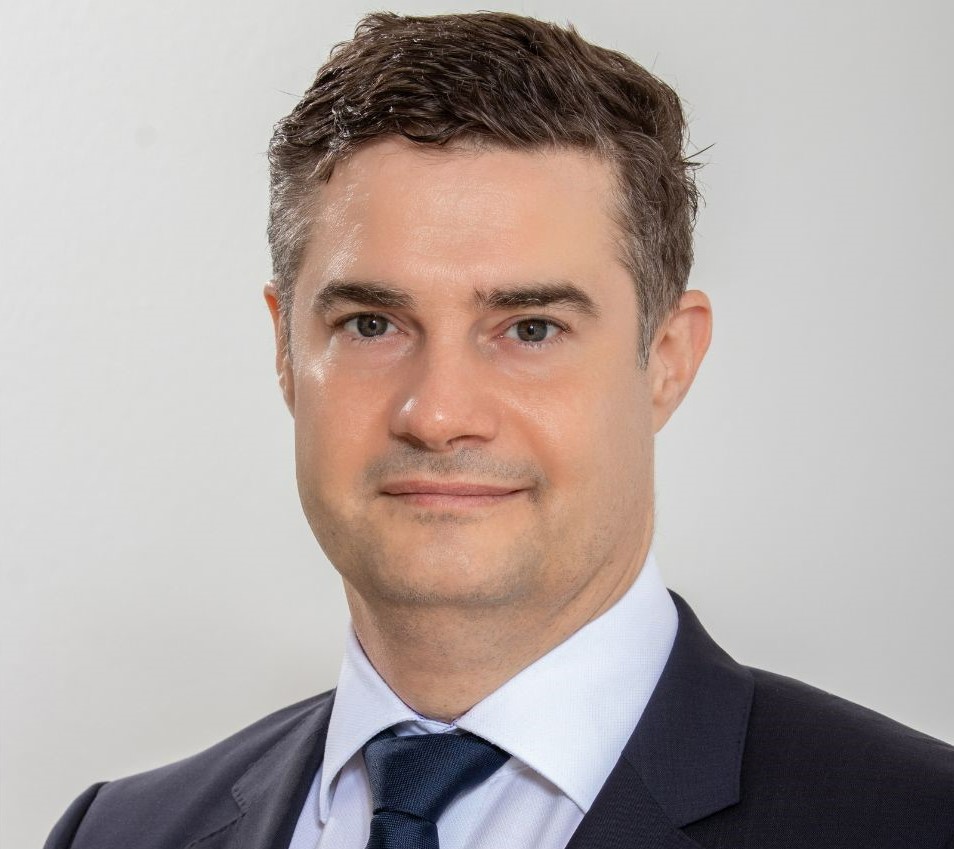
AmCham: This year's WFM Committee program focuses on ESG aspects. Could you please briefly summarize what ESG specifically means in terms of the real estate market and why this topic deserves more attention? Are there any ESG aspects that are particularly important when it comes to the property market?
Zs.K.: ESG, or environment, social and governance, stands for sustainability efforts in the real estate market. Without taking sustainability into account, real estate investment or operations are unthinkable today, as the uncertainty of the economic environment, rising energy costs, and the current geopolitical situation are all issues affecting businesses and real estate that require solutions. I couldn't single out any one of these aspects, I think they are all equally important. However, in addition to ESG, I also consider data gathering to be another important topic, the possibilities and solutions of digitalization, data-driven operations, data collection and organization, which also offer great potential for discussing forward-looking ideas.
AmCham: Some have concerns on how implementing ESG would affect profit. Can you give us a practical example which demonstrates that ESG and profit can support each other or when implementing ESG has proved particularly profitable?
Zs. K.: Fortunately, in this respect Hungary follows global trends, thus, it is increasingly important for tenants to rent such a property that meets advanced ESG standards. As utility costs have undergone a dramatic increase during the last couple of months, better thermal isolation and economical property management methods can lead to substantial advantages for both property management companies and their customers. ESG mindfulness not only can reduce the cost of running a business but – as society is more aware of the importance of ESG goals, - it can even attract more clients too. Therefore, I believe, it is rather unquestionable that ESG goals have prime importance in realizing higher profit in the long run. In addition, ESG also plays an important role in keeping tenants, as they prefer to stay in such healthy and sustainable buildings.
AmCham: Where does Hungary rank in terms of ESG awareness compared with the US or other European countries ?
Zs. K.: ESG awareness is getting more and more important globally and Hungary is no exception. We, at ICON, experience that for a significant proportion of our tenants, employee well-being and sustainability indicators are now more important than rent fees alone when making a decision. Even though – of course – there is ample room for further improvement in this regard, I maintain that the Hungarian businesses are on the right path in terms of ESG awareness, and with some more effort we can perform just as well as other countries do on both sides of the Atlantic Ocean.
Amcham: Back to the program of the Committee, is there any that you’re particularly looking for and why?
Zs. K.: What I am specifically looking for are solutions and best practices that can add value to the challenges of the current economic climate for the committee and the Chamber membership as a whole. With 25 years of professional experience and years of participation in the Workspace & Facilities Management Committee, I can clearly see that I share common problems with the American Chamber of Commerce and the Workspace & Facilities Management Committee members, who are highly qualified and are open to professional discussions, so I am convinced that we can find solutions together.