
EU funds contribute to large-scale projects that support businesses, academia, infrastructure development and economic growth. Therefore, the availability of these resources is key to competitiveness. To learn more about Hungary’s status regarding the EU-funds, how the Ministry for Regional Development assesses the current situation, and what its focus areas are, we invited Minister Navracsics to our Business Forum on October 3.
The minister stated that in total - with co-financing from Hungary - more than HUF 14,000 billion of EU funding has been made available to Hungary for the period 2021-2027. Within the 2021-2027 Multiannual Financial Framework (MFF) of the European Union - with domestic co-financing - nearly HUF 9 792.3 billion[1]was allocated to Operational Programs.
MFF resources of the 2021-2027 were firstly assigned to the area of economic development and info-communication (GINOP+), furthermore, significant amounts have been earmarked also for environment and energy related projects (KEHOP +) as well as fourban development (TOP +).
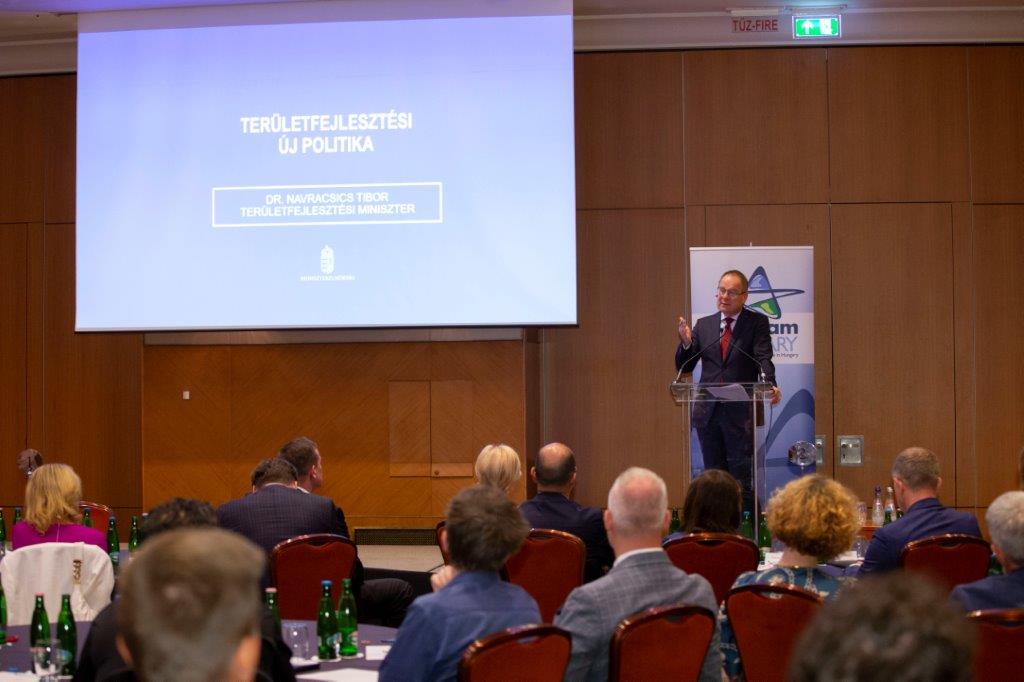
The minister also highlighted, Hungary's Recovery and Resilience Plan was approved in December 2022 (by the European Commission and the Council) that covers a total of nearly HUF 2 300 billion of strategic development projects until the end of 2026. However, for the funds to be given the green light, there are still some conditions to be met. The European Commission expects the Hungarian Government to meet more than 30 horizontal conditions.
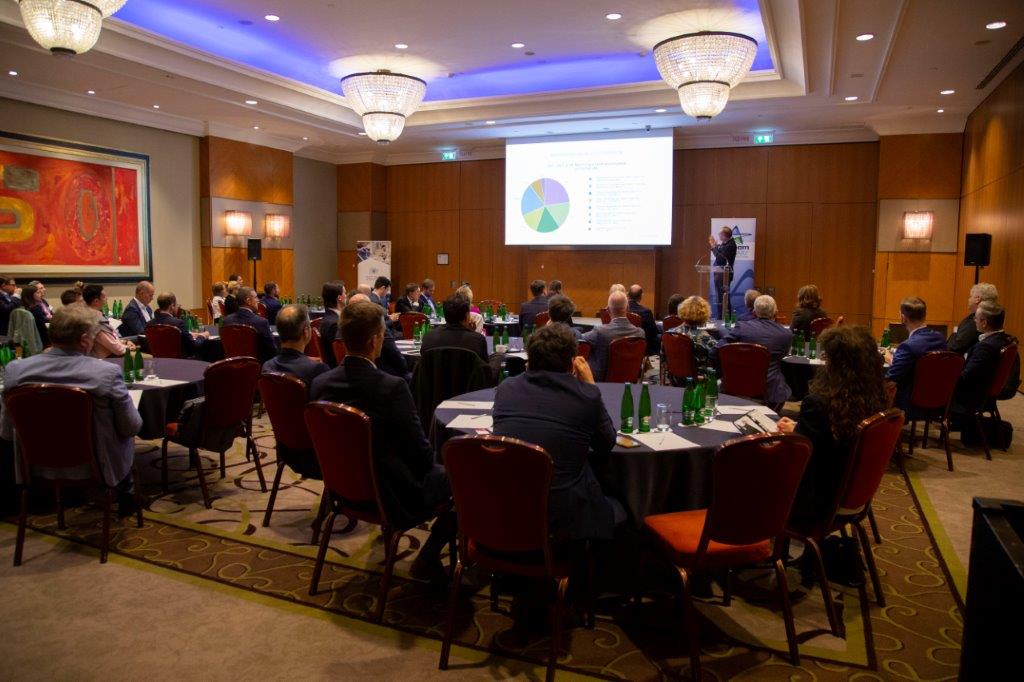
Receiving the funds as early as possible would be essential as the RFF funds can only be used by 2026. This means that all projects must be technically completed by 31 August 2026, without the possibility for extension. Delays could shorten the timeframe available for the implementation of projects, which raises questions particularly in the case of large-scale projects such as infrastructure developments.
To alleviate potential risks, the government is pre-financing some projects from its own resources – added the minister.
He also states that Hungary has also applied for repayable financing under the Recovery and Resilience Facility (a performance-based temporary recovery instrument to mitigate the economic and social impact of COVID19).
According to the plan submitted, the RRF loan to be mobilized amounts to more than EUR 3.9 billion, equivalent to HUF 1 497 billion[2] and would be predominantly allocated to projects supporting energy independence and green investments related to the REPowerEU initiative.