
Global challenges of the past years such as Covid pandemic or the Russian invasion in Ukraine have resulted in a very fast evolving and uncertain international environment affecting the geopolitical landscape and international trade. To provide our members an update on how the Ministry of Foreign Affairs and Trade assesses the current situation, we invited Minister Szijjártó to our Business Forum on April 3.
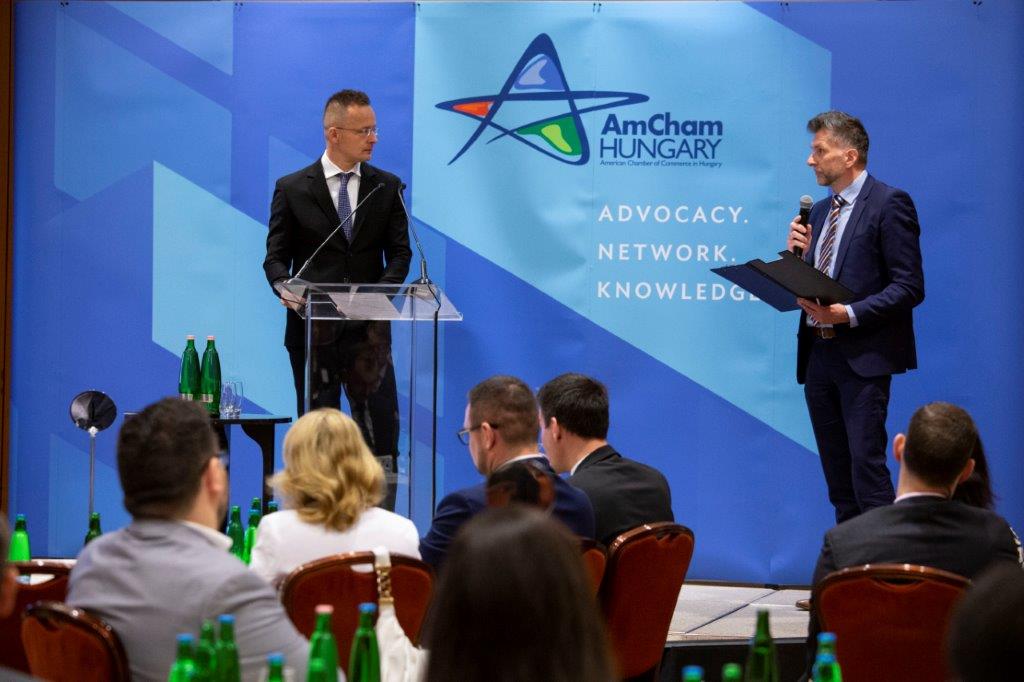
Attendees of the business forum were first provided a summary of the economic consequences of the war between Ukraine and Russia. According to the minister, although it is a regional conflict, its price is paid by the entire continent in the form of inflation, surging energy prices and commodity shortages. Most of all, European competitiveness suffers. By comparison, in Europe natural gas costs seven times more than in the U.S., and the price of electricity is three times higher than in China.
Despite the challenges, as it was expressed by Minister Szijjártó, the government has a clear strategy made up of four pillars to keep the economy on growth track. Firstly, it will continue to support export activities and secondly, Hungarian companies to invest abroad. The Minister referred to FDI as a key factor for economic development and said they would therefore mobilize all assets to increase FDI.
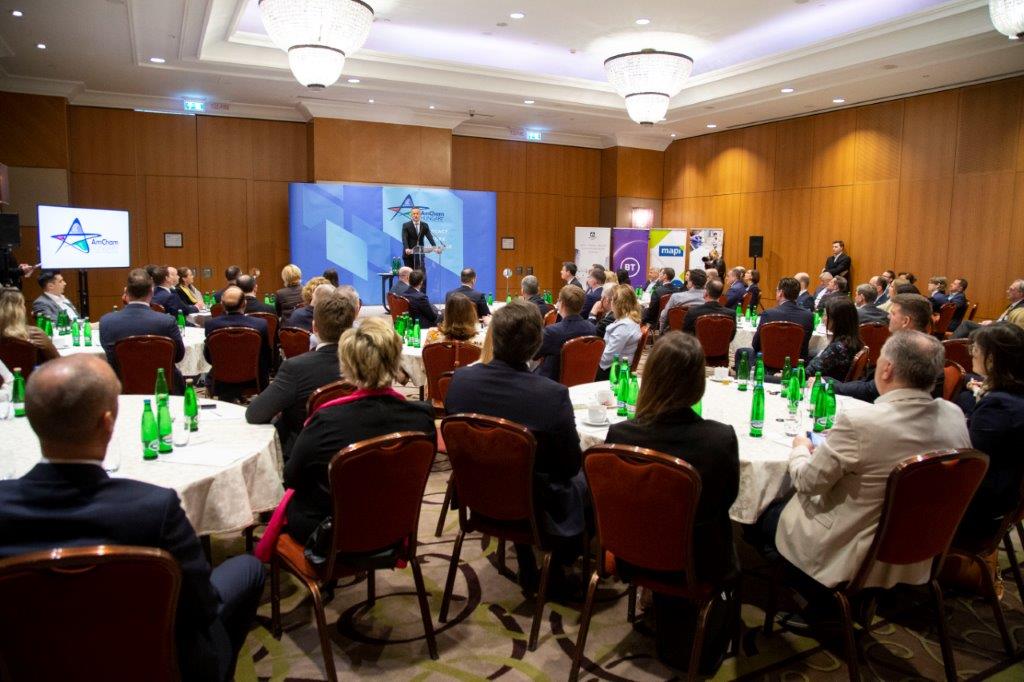
He also pointed out that American companies operating in Hungary bring a significant contribution to the country's economic competitiveness: there are 1,700 American companies in the country, employing some 107,000 people, several of which have signed strategic partnership agreements with the government.
With 48% of investment coming from the East and 42% from the West, AmCham raised the question of how the Hungarian government intends to maintain economic balance in the future to preserve its impartiality. In response, the Minister noted that Hungary does not discriminate against companies from any country, making it a meeting point for Eastern and Western investment as is the case in the automotive sector.
He also listed energy security as the fourth pillar of Hungary’s long-term economic strategy. Hungary will also seek to diversify in this respect but won’t give up any reliable sources. Additional sources would be partially implemented by supplying 100 million cubic meters per year of natural gas from Azerbaijan, starting at the end of this year, which under a long-term contract is set to go up to 2 billion cubic meters. Ongoing talks with Southeastern countries can make more Azeri gas and LNG from Greece and Turkey accessible to the CEE region. He then also said that the new nuclear power bloc in Paks is scheduled to be up and running in 2030 or 2031 which will provide ultimate energy security for the economy.
Concerns over FDI and US-Hungarian Business relations related to the absence of the Double Taxation Treaty
Many companies are concerned over the termination of the double taxation treaty between Hungary and the U.S. Even if the Hungarian Government sees no obstacle from their side to begin negotiations on a new treaty - based on the comments of Minister Szijjártó - the question remains whether and when new a convention will come to live.
AmCham is currently working to assess the short- and long-term impact of the expiry of the Treaty and to facilitate dialogue between decision-makers. In addition, a newly formed task force of their Tax Committee is dedicated to clarifying emerging questions and uncertainties as well as finding possible solutions from the business side to the challenges that emerge from the cancellation. However, AmCham is concerned that the negotiation of a new treaty could take years.
Find more photos about the event are in the Gallery.