
In view of recent changes and challenges now taking place in the energy sector, and to learn about the Ministry of Energy set up at the end of last year, on February 28 we invited Minister Lantos to our first Business Forum of the year where the Minister presented the portfolio and priorities of the Ministry.
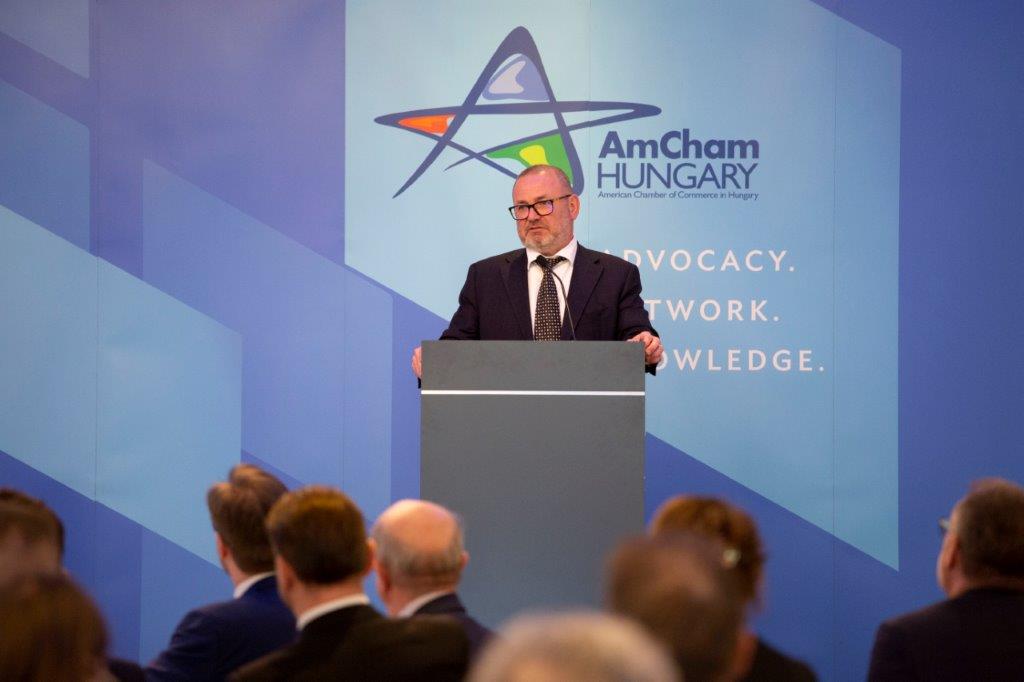
Minister Lantos in his presentation expressed that their objective is to tackle the quadruple issue of security of supply, affordability, sustainability, and the increasing energy need in their energy policy.
Their priority, as a starting point, is to ensure security of supply while reducing the energy dependence of Hungary. He stated that in 2021 76% of energy supply was covered by imports. The highest share was measured in the case of natural gas where 87% of total demand was supplied from import. In 2022, however, Hungary made a significant progress as the annual gas consumption was reduced by 17%.
On the goals and challenges related to natural gas, the Minister said that one of them is to diversify and secure supply routes. In this respect he mentioned that interconnectors with neighboring countries such as the Polish-Slovak interconnecting gas pipeline have an important role, and, to further expand the opportunities for diversification, they are also planning the construction of an interconnector with Slovenia.
In terms of affordability, he referred to recent government decisions stating that there will be no increase this year in the reduced household utility price of electricity, gas or district heating and they maintain fixed district heating tariffs. He also made reference to the Factory Rescue Program they launched to support businesses.
In relation to the energy strategy, on the long term the ministry would establish a multi-legged system, on the one hand built on transitional energy resources such as natural gas and nuclear energy, and, on the other hand, on renewables including primarily solar, geothermal energy, biogas and biomass complemented with the more widespread use of hydrogen, battery technology as well as the utilization of clean coal as a reserve source. In addition, they would also rely on wind energy as complementary technology.
Minister Lantos also added that even though natural gas currently has significant importance in terms of energy supply and to balance the energy grid, in the forthcoming years the country should gradually move away from natural gas towards the proliferation of renewables as mentioned and electrification. The arrival of weather-dependent renewable energy production would trigger demand for grid and power plant development. To finance developments, they would also mobilize EU funds, mainly Recovery and Resilience Facility (RFF) resources to develop infrastructure. He also claimed that compared to the previous EU budget cycle, they will quintuple the amount spent on energy investment and development related projects.
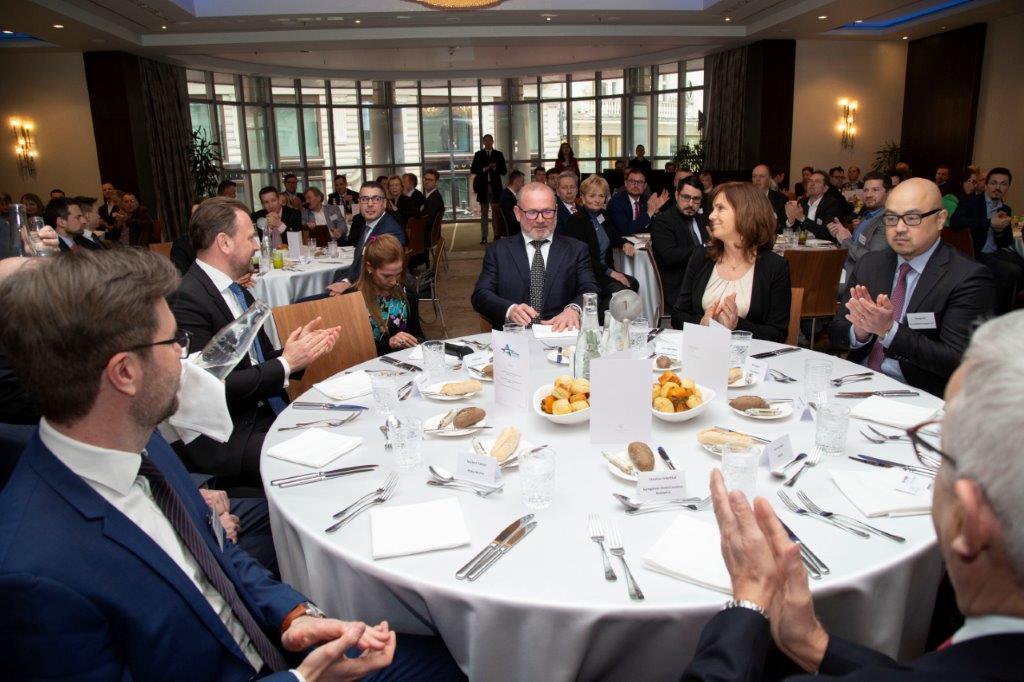
Minister Lantos, stressing the importance of nuclear energy noted that the they do not envisage a sustainable policy without it and cited that Paks I accounts for one third of the country's average consumption. Nuclear energy is considered by the government as a long term, clean solution which also contributes to replacing fossil energy imports. Therefore, the government wishes to extend the operating license of Paks I and would further expand nuclear production capacity with Paks II.
He also included in his presentation that the role of solar energy is expected to increase significantly by 2030. The aim is to achieve 6.3 GWh of installed capacity, but there is also a potential to reach 12 GWh. Moreover, solar energy is expected to ensure 30% of electricity production by 2050.
***
Thanks for our supporters, ExxonMobil Hungary, GE Hungary, O&GD Central, Philip Morris International and the urban institute Hungary for making the event possible.
Photos about the event are available in the gallery.