
On behalf of AmCham Supervisory Board Chair, Andrea Jádi Németh we would like to invite you for this special event, where the distinguished contacts at our member companies can listen to the rehearsal of 4 compositions by Johannes Brahms. The Orchestra conducted by Iván Fischer will perform two of Brahms's Hungarian Dances, a challenging concerto and a symphony.
• Brahms: Hungarian Dance No. 21 in E minor
• Brahms: Double Concerto in A minor, Op. 102
• Brahms: Hungarian Dance No. 14 in D minor
• Brahms: Symphony No. 4 in E minor, Op. 98
Program:
09:00-09:45 - Arrival and breakfast, networking
10:00-11:30 - Rehearsal – Part I
11:30-11:50 - Break
11:50-13:00 - Rehearsal – Part II
The event is open only to AmCham members. Participation at the event is free of charge, but registration is required. Seats are limited, registration is accepted on a first come first served basis. To reserve your seat, please register at ildiko.berka [at] amcham.hu before May 7.
Parking
Parking is available in the underground garage of MÜPA, the parking fee is 400 HUF/hour. Parking fee can be paid at any of the parking terminals in cash or with card.


About the program
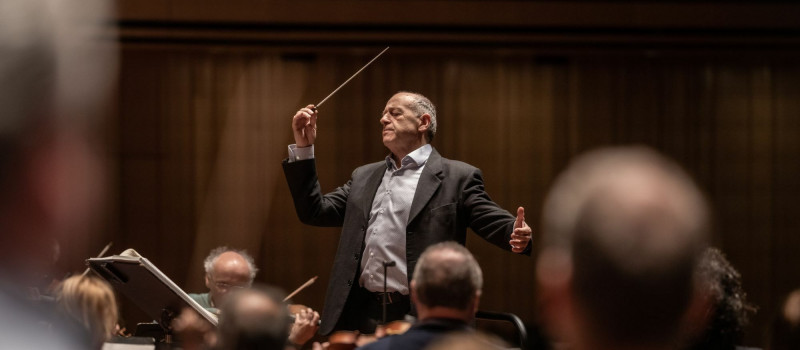
Conductor: Iván Fischer
Featuring: violin - Veronika Eberle and cello - Steven Isserlis
The violin solo is played by Veronika Eberle on a 1693 Stradivarius, the sound of which, according to an expert, "is like a warm sunbeam breaking through the clouds.” Her partner is the multi-faceted legend and Gramophone Hall of Fame member, Steven Isserlis, who refers to himself as a cellist, author, and a general explorer and fan of all things music.
The 21 Hungarian Dances is the most widely known series of the Brahms oeuvre. The composer's violinist friend, Ede Reményi, introduced him to Hungarian urban Gypsy music, and the genres of csárdás and verbunkos. The piano pieces for four hands, which Brahms called arrangements, are better known today in their orchestral versions. With its nimble tempo, rich ornamentation, and the prominent role of the flute, the 21st Hungarian Dance is reminiscent of virtuoso folk recorder playing. The 14th piece in the series is one of the few dances in which Brahms did not use any borrowed melodies. It is slow, elegant music that resembles a palotás, a Hungarian court dance.
"I was struck with the amusing idea of writing a concerto for violin and cello,” Brahms wrote to Clara Schumann. The Double Concerto is a gesture of reconciliation towards Joseph Joachim, who harboured anger towards him. The piece, in which the cello solo symbolises Brahms and the violin solo Joachim, achieved the desired effect. The two figures reengaged in dialogue and found harmony with one another both in the music and in life.
Brahms feared that the dramatic, serious tone of his Symphony No. 4 would be poorly received. However, the premiere conducted by the composer was a great success, and two movements were repeated with the Meiningen orchestra. In the first movement, a simple motto-like theme and a rhythmic melody weave an increasingly complex web. The classical sonata form is followed by a slow movement using medieval Phrygian tonality, in which the melody considered to be Brahms's most beautiful is played. The composer unleashes his sense of humor in the scherzo by enhancing the cheerful mood with the tinkling of the triangle. The finale, written in the form of a Baroque chaconne, builds on a Bach bass melody, adding increasingly intricate variations to bring the piece to a painful end.
